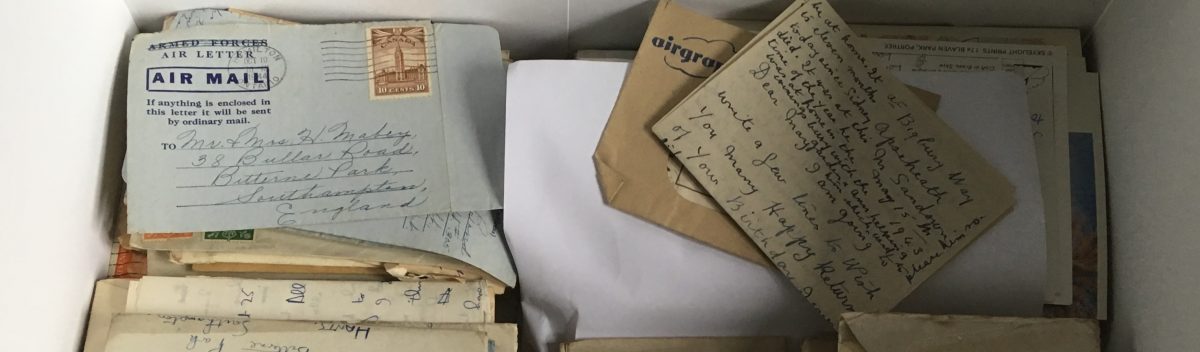
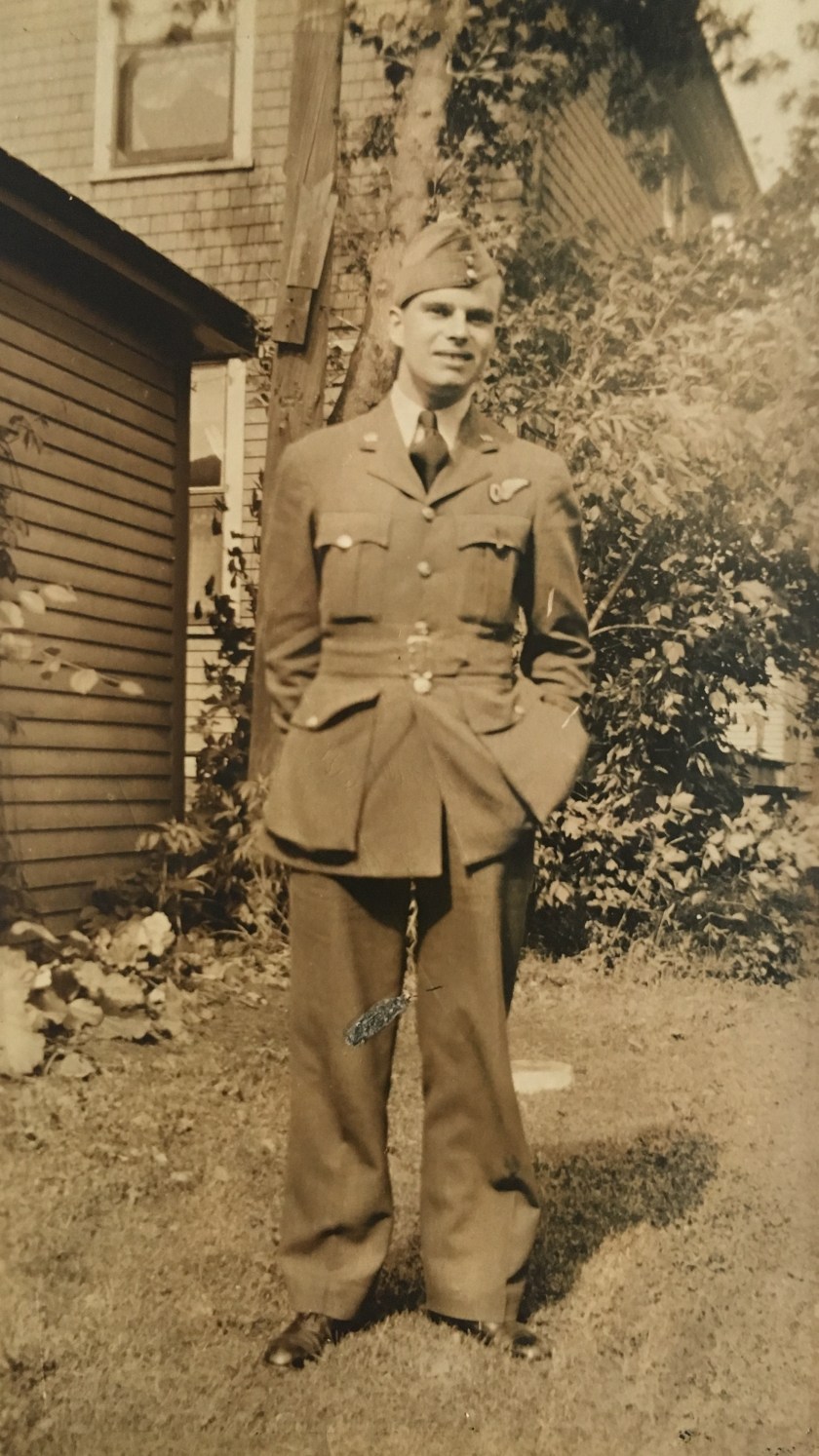
I know very little about him. I know my uncle was born in Southampton on 20 July 1921 and that he died in Scotland in January 1944. He was the eldest child of Hedley and May Mabey, my grandparents. He worked as an industrial chemist before his service in the RAF. He was a clever, handsome man and a keen photographer.
Were I to write that he was a presence in my childhood, I would be lying. All I remember is this photograph that was in my parents’ bedroom, finding the ‘big black compass’ and the book of poetry.
Ours was not a house filled with photographs but paintings hung on every wall in every room. The only two photographs on display when I was a young child were Albert’s and my Father’s mother. I knew that they were both dead, and thus in my solemn way I equated photographs with mourning.
We got into trouble once through playing with the ‘big black compass’ in the wild part of our garden. I think my sisters and I were being spies. The misdemeanour was my doing. It was I who rummaged around in the airing cupboard, pushing my small hands under the ‘good tablecloths’ at the back. There, amongst the bars of yellow soap and Imperial Leather talcum powder, I felt a leather handle to pull at. This was attached to the curious block of metal, which I furtively transported downstairs and out to our spot in the garden. Later Mother scolded me for taking what I should not. I knew I had done wrong but I could not understand the hurt upon her face. She never said it belonged to him. We called the heavy, square box a ‘big black compass’ because of its glass-faced display of semi-circular dials and red needles. It was a mechanical mystery. My uncle, what he did and who he was, was another type of mystery. I know now he was a flight navigator, but the function of that instrument will remain a puzzle, for Mother made sure that we never saw it again.
The book of poetry was the collected works of Keats. There was an inscription in it, from his girlfriend Joyce. Mother let me borrow it when I was at university, on condition that I took good care. I looked for the book after Mother died, but she must have given it away. What happened to the big black compass heaven only knows. The photograph stayed on the chest of drawers until my parents moved to live with my sister. ‘Long enough’ I suppose she said to herself – 40 years was long enough.
I have sent away for Albert’s service record and I hope that it will yield more concrete information, I’m waiting another week before starting on his letters, in the hope that I will receive the record soon. So it goes that more than 70 years since he passed away, almost everything I will know of Albert will come from his own hand.
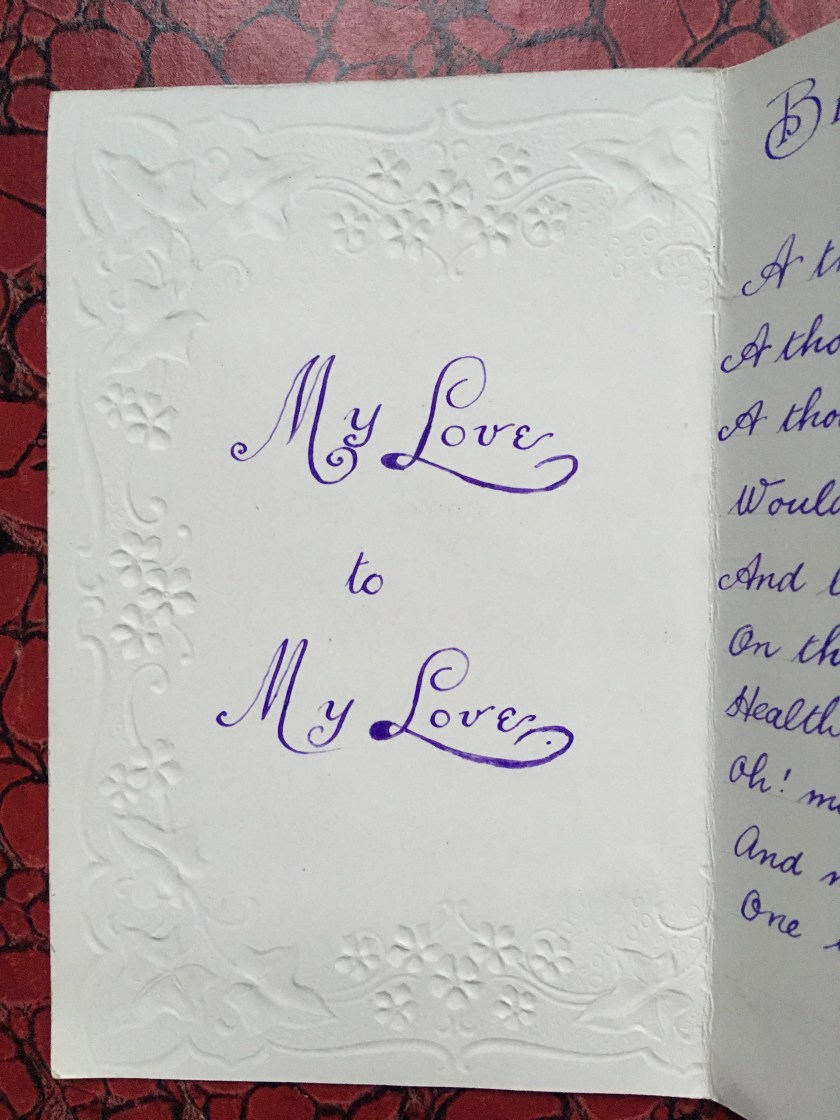
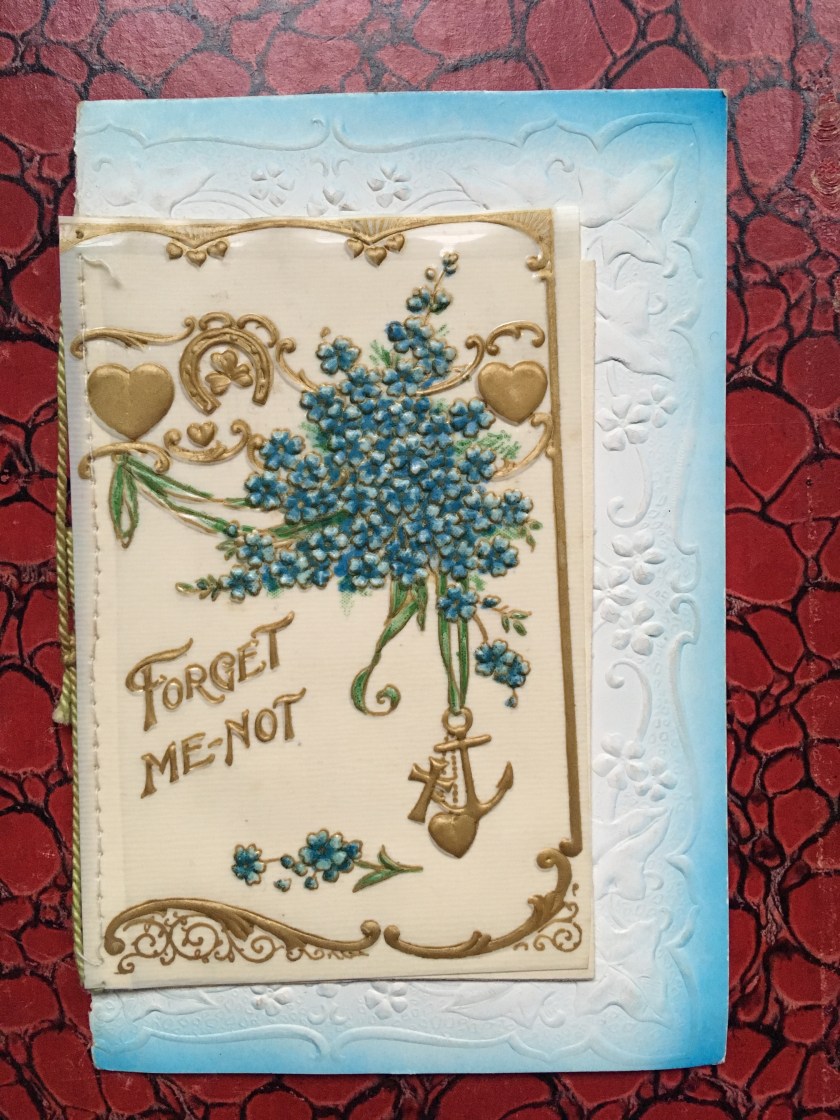 One hundred and one years ago my Grandfather sent this card to my Grandmother. Three years later, in 1920, they married. Their marriage ended with my dear Grandfather’s death in 1963. ‘Dear Grandfather’ – a phrase I never thought to utter before I began to read The Letters. I regard that as a benefaction of the universe, that now I feel a connection to a man I never knew whilst he lived.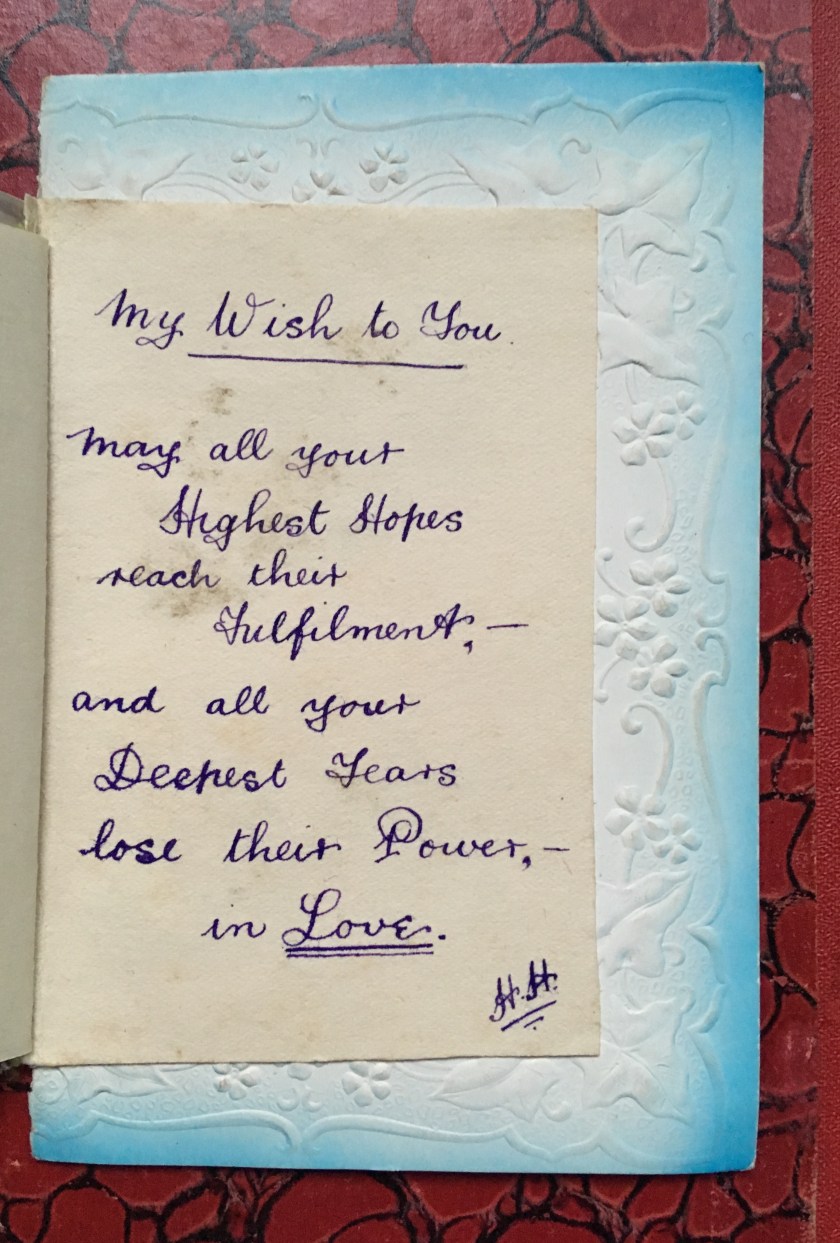
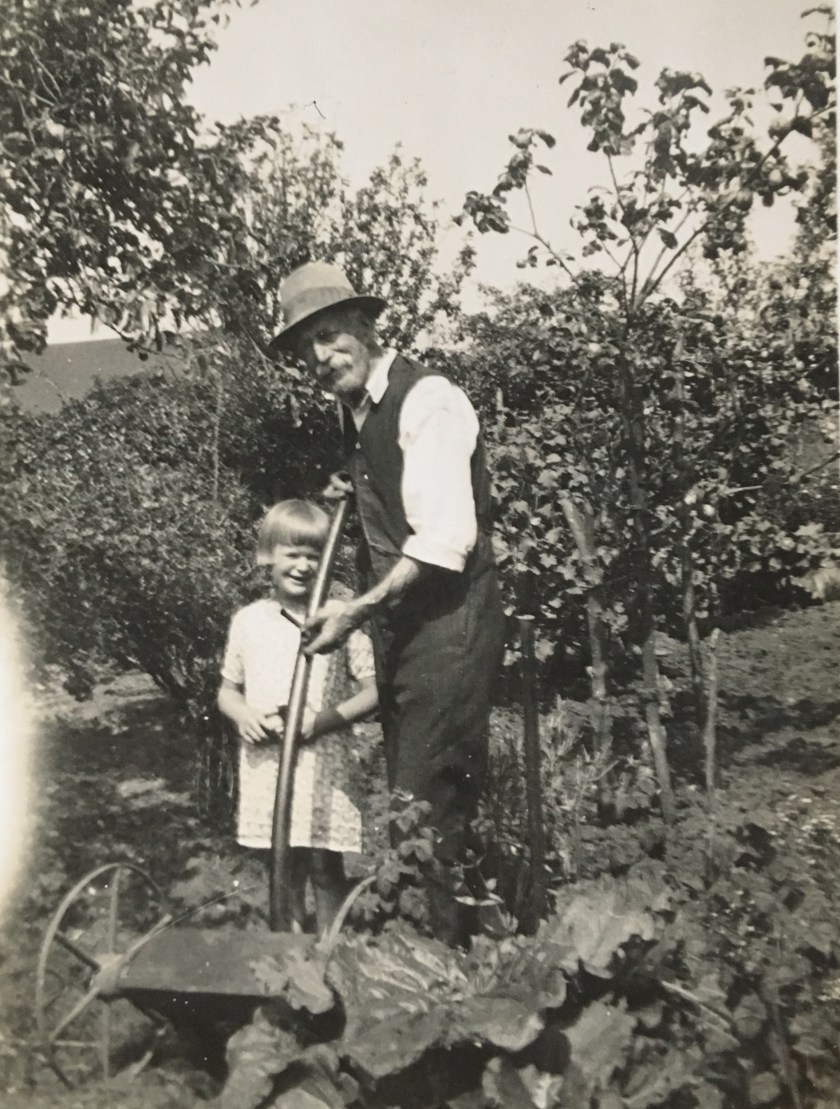
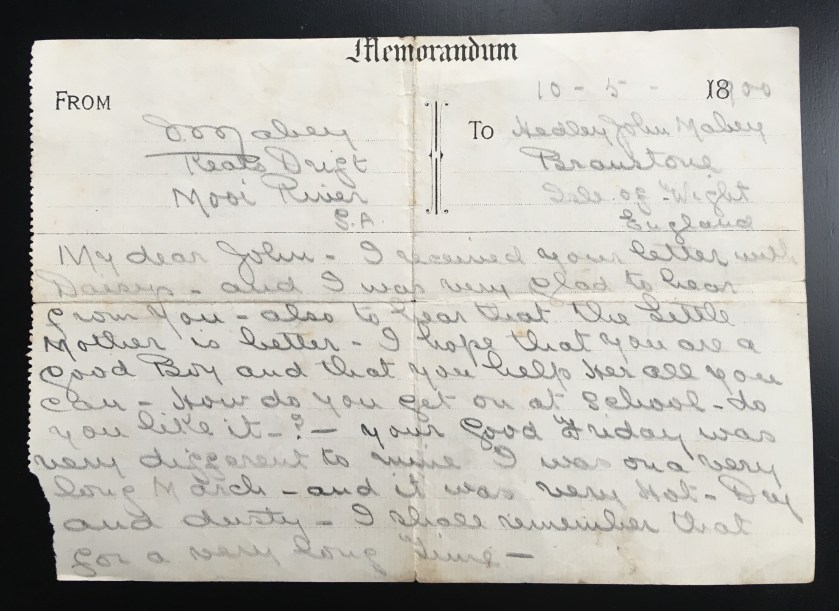
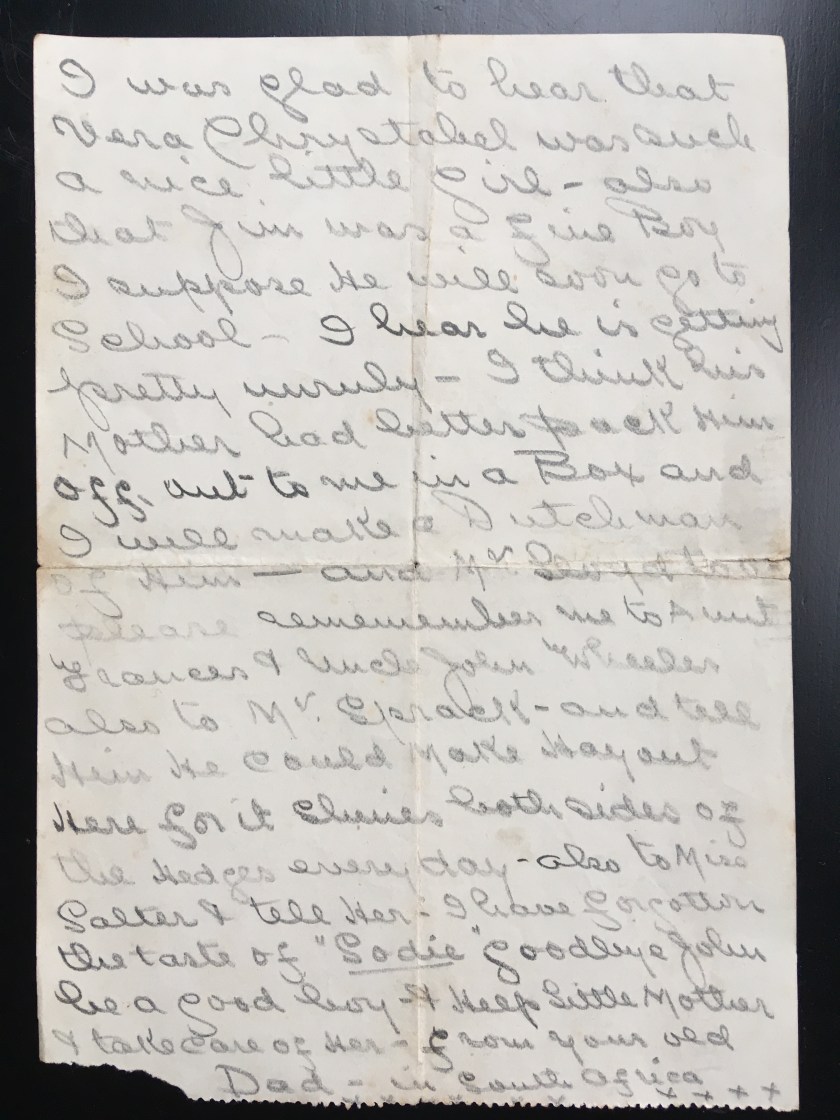
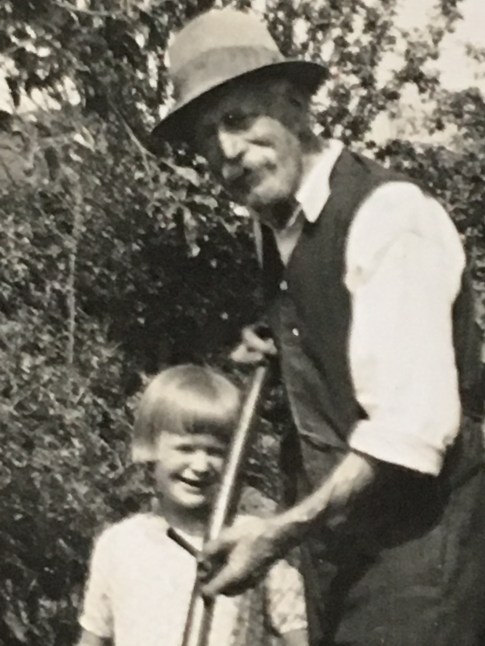
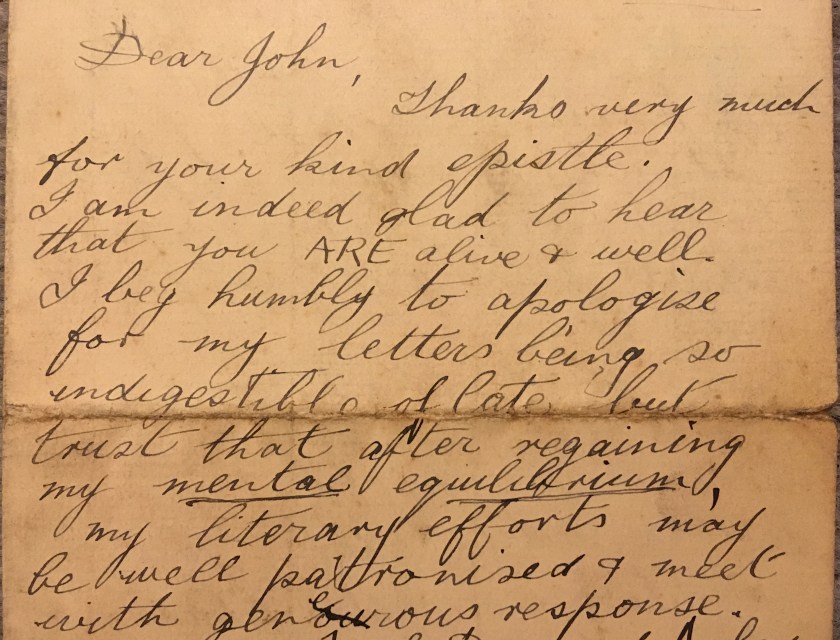 My Great-Uncle replies to my Grandfather’s letter in March 1912. He has left The Island. This is a letter full of puzzles, which no-one living can solve for me. I know that Edie and Elsie were the older Mabey sisters but why and where did they meet with Lloyd? I will never know who “Daisy of Ashey” was, nor what she knew of Lloyd’s state of mind. The 1911 Census records Lloyd as living at home and working as a nurseryman. One year later he is 19 and in West London; there are no clues to the cause of this separation. Lloyd chides my Grandfather for ‘certain practices’ suggesting something sexual and not entirely wholesome. It seems my Grandfather has given him unwanted advice about finances that still smarts – “That is hardly my nature.” Yet Lloyd wishes still to impress his scholarly older brother, for he writes that he will be submitting an article to ‘John Bull’ the following week, although he alludes no further to its subject matter. I wonder if he felt too shy to give details, or maybe there was no article to speak of.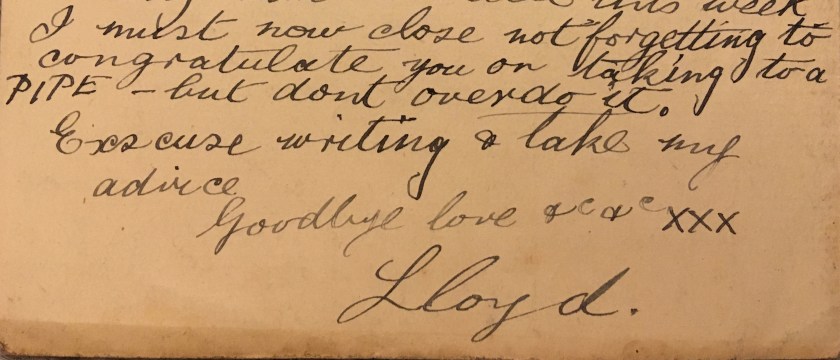
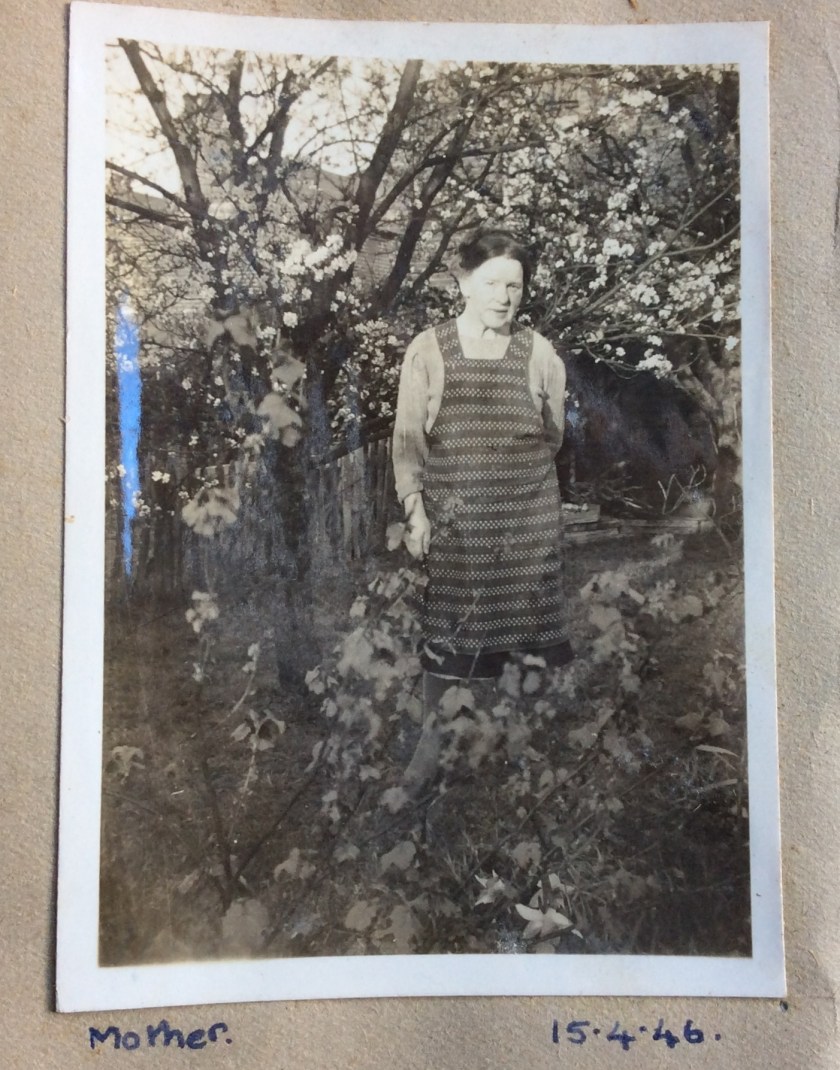 There are no memories of my Grandmother; all my life an absence of recollection. In those two years before her death in 1965 I know she would have held me, countless times. I know she must have murmured over my tiny form, held my steady, infant gaze, kissed my forehead and felt my tiny fingers wrap round hers. And I imagine that she would bless me before handing me back to her daughter, and I would have made her glad, hopeful – in the miraculous way that babies do.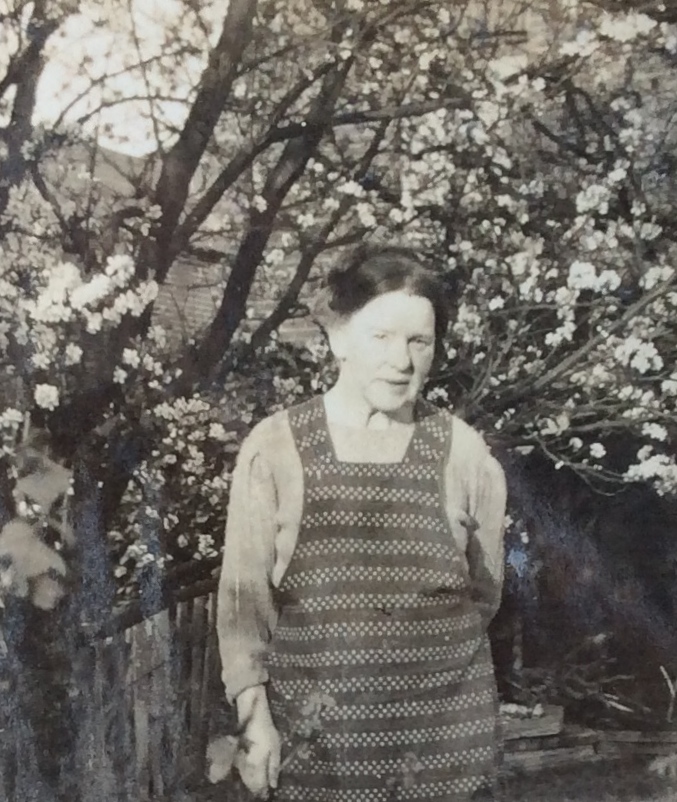
 The Letters