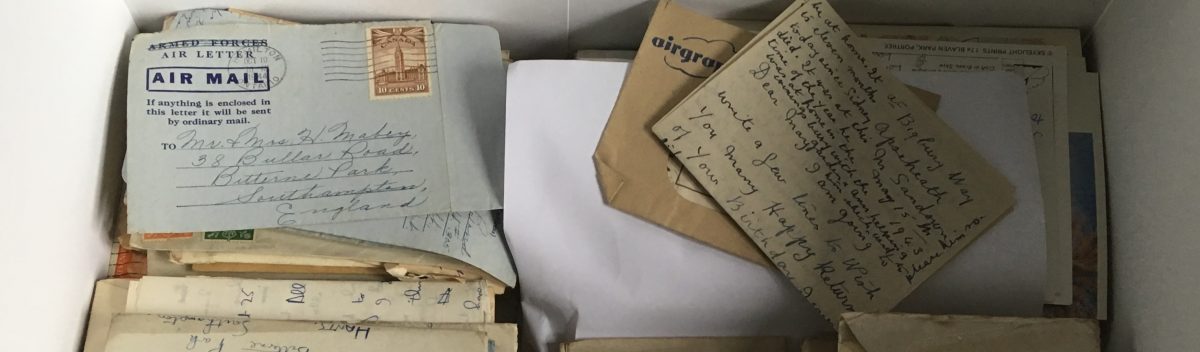
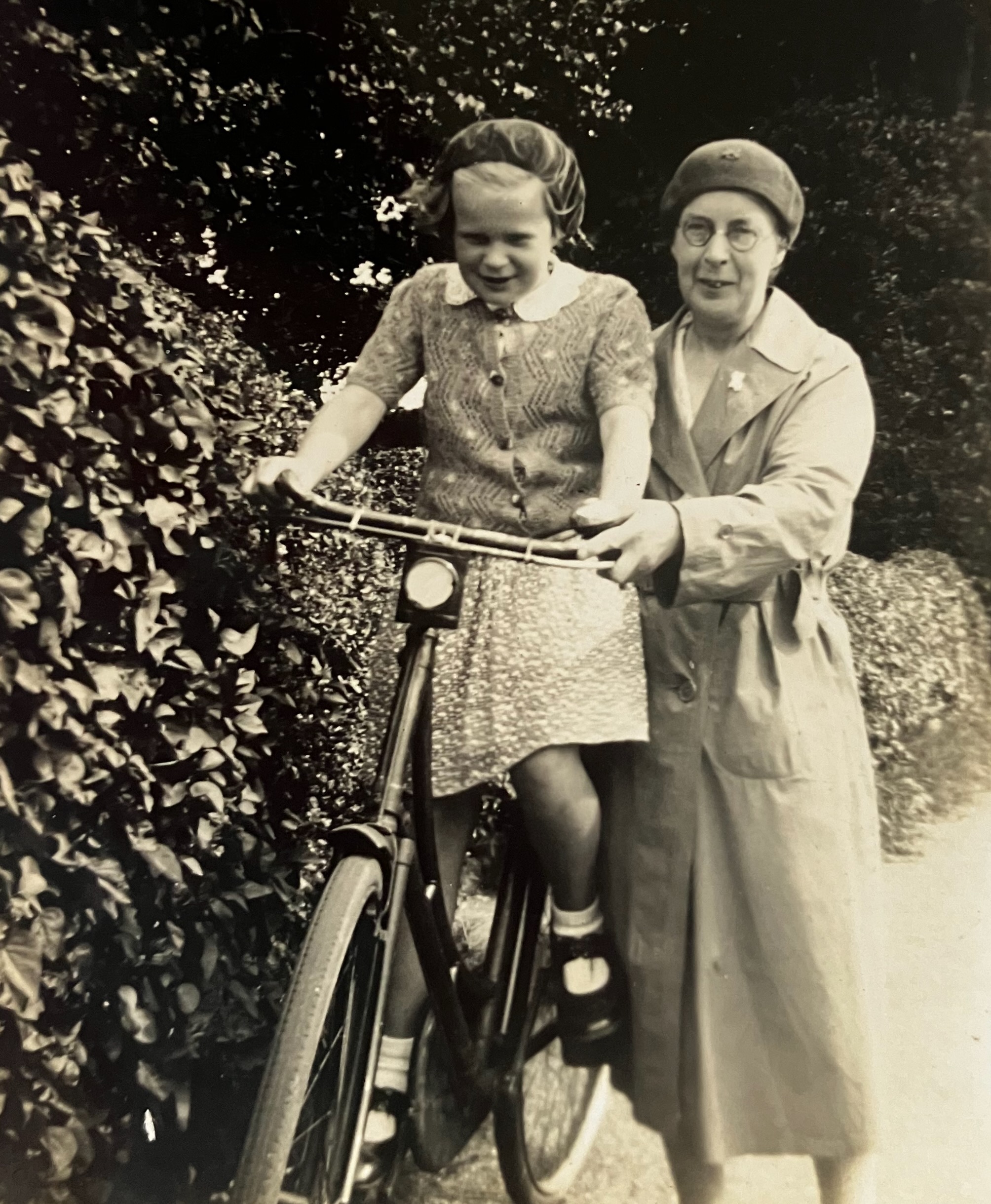
Jean with Auntie Norah at Branstone, Isle of Wight.
From all those years ago, with my mother gone nearly ten years now, it’s warming to read that Albert was so pleased about his little sister’s cycling success. Here is Jean, my mother, with my great aunt Norah. Jean is perched precariously on an adult-sized bicycle, but no doubt she had grown in confidence by the time she had passed her test.
I don’t know exactly what test she took – most likely a regional precursor of the RoSPA Cycling Proficiency Test that was a well known feature of primary school education when I was a child. In any case, Albert is delighted. Ever the thoughtful older brother, he writes his congratulations to her, and has some advice for his parents about the brakes.
Wednesday June 17 1942
Please note Victoria Parade, Victoria Parade, Victoria Parade
Dear All,
I was very pleased to receive your letter telling of Jean’s cycling accomplishment. I was so pleased in fact that I at once wrote a note to her congratulating her on her feat. When I was home, I remember that she had some difficulty in putting on the brakes very well. I believe that some of the difficulty was due to the curved shape of the brake levers, which made it rather a width for her to grasp. If she still has some difficulty in applying the brakes, perhaps the brake levers on the bike should be swopped for those on Mummy’s, which are more nearly straight and would not make such a width.
I have noted the letter from Shell-Mex, and will reply to it in a day or two, but I think it would be better for me to have the excess knocked off one month’s allowance, as at the end of the course – eight weeks from commencement – my pay is again raised, from which time I should have little or nothing from Shell-Mex, so I don’t want to have to start paying them money! I will also see about making an allotment, as my pay now is certainly quite enough for my needs. When I do, you can go on buying Saving Certificates with that money.
Earlier in the week, it must have been Monday, I received the letter which you posted but did not address. Apparently, the RAF postal Dept had been busy, and from my rank and number had discovered my whereabouts and sent it on. You will see that they sent it to ARC Abbey Lodge (should have been ACRC) and Abbey Lodge sent it to Torquay, by some transport of their own presumably, as there is no postmark – yes, I see there is – on the back. I enclose the envelope for your inspection.
I think our weather has been rather better than yours, though Monday was cold, & it rained in the afternoon. We were on organised games in the afternoon but due to the weather our swimming was done in the baths, instead of the sea. It would have been better if we had had our games yesterday, as it was much warmer, though there was a thunder-shower in the morning. Today has been quite fine, though not sunny all the time.
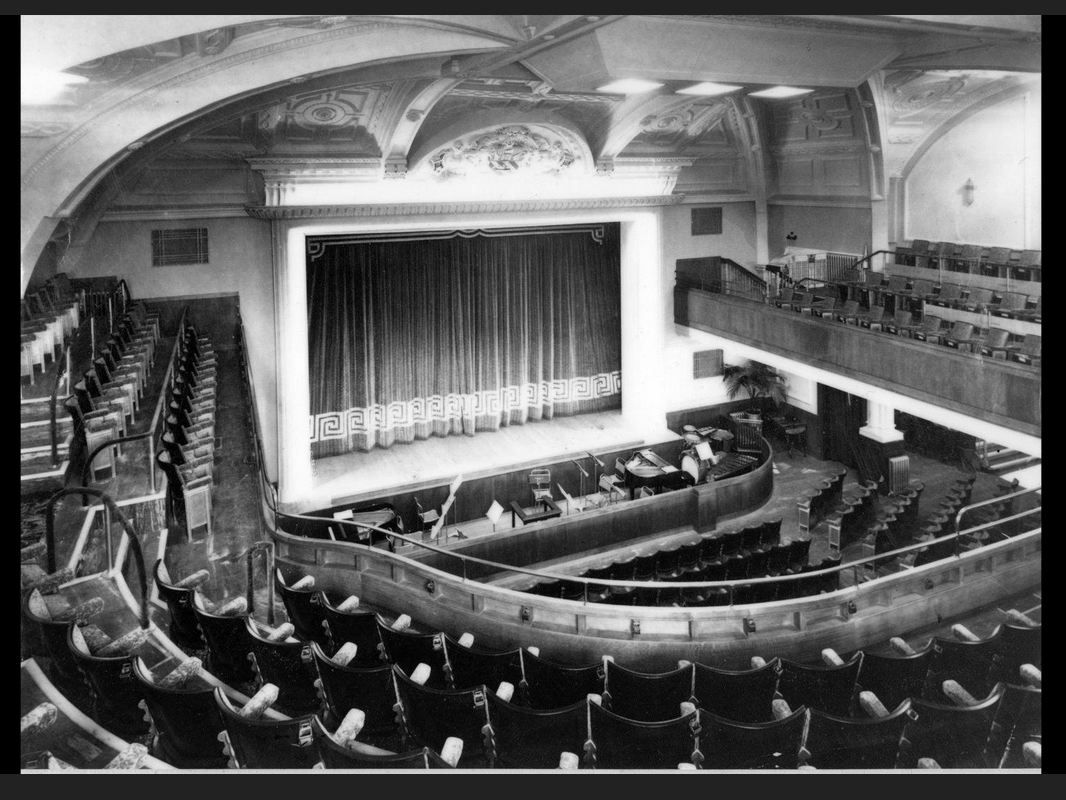
On Monday I went to the Pavilion to see the Anglo-Polish Ballet, of which I enclose the programme. You may remember that I saw the same company at Oxford and some of the items (those with *) were the same. I enjoyed it very much, especially as I got an excellent seat for only 1/6. The stage is a very good modern one, and as the place is not large, one is assured of being able to see well.
It is now Wednesday evening and I have missed the post (6.15). I must finish off tonight or I will not catch the morning one, which goes at the unmentionable hour of 6.0 am! The posts are promptly collected too. We get two deliveries daily, at dinner time and tea time, and they are efficiently managed. I managed to write to Shell-Mex in the maths class today, and yesterday and Monday I was writing to Phil. I posted that this morning, and before I run out of airmail paper, I should like to write to Raymond so would you send along his letter with your next one.
Mentioning that reminds me that next week we go on to navigation instead of maths and that won’t give me much time in which to write letters. I must also make some proper notes of that, and I think that one of my old school files should prove very useful for that.
I wonder if you could find an empty file in reasonable condition. If it is something like French, English, Physics, Maths (but not Chemistry) you can dump the contents for salvage. As to paper, I believe there is a nearly new Taunton’s block in the homework cupboard. If there is not one there, there should be a new one in my photography cupboard on the very ground floor at the back; underneath some boxes and papers and things. That will make quite a lot to send off, if you have not sent the original order off already. Another thing I should like if you come across it is a ‘Penguin’ book of aircraft recognition.
I am afraid this letter seems to contain little of real interest, I hope I shall be able to write something more interesting on Sunday, love to all, from Albert.
P.S. This place seems to be infested with moths. I am killing them all day and this very moment am about to get up in pursuit of one.
Last P.S. I have some envelopes like this (the long ones I usually send my letters in) at home in my ‘homework’ cupboard or front room drawer – would you send them with the next lot of stuff?
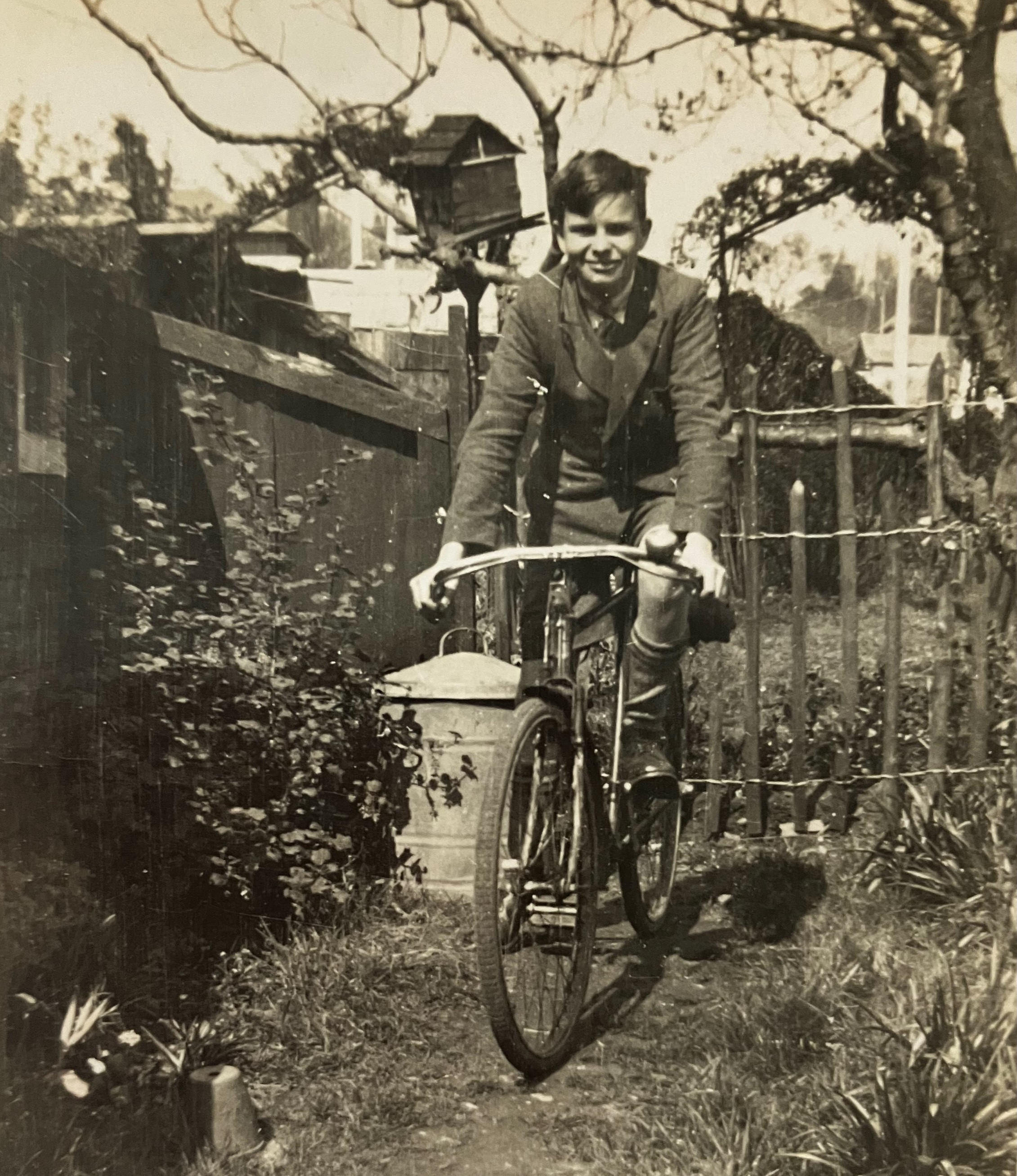
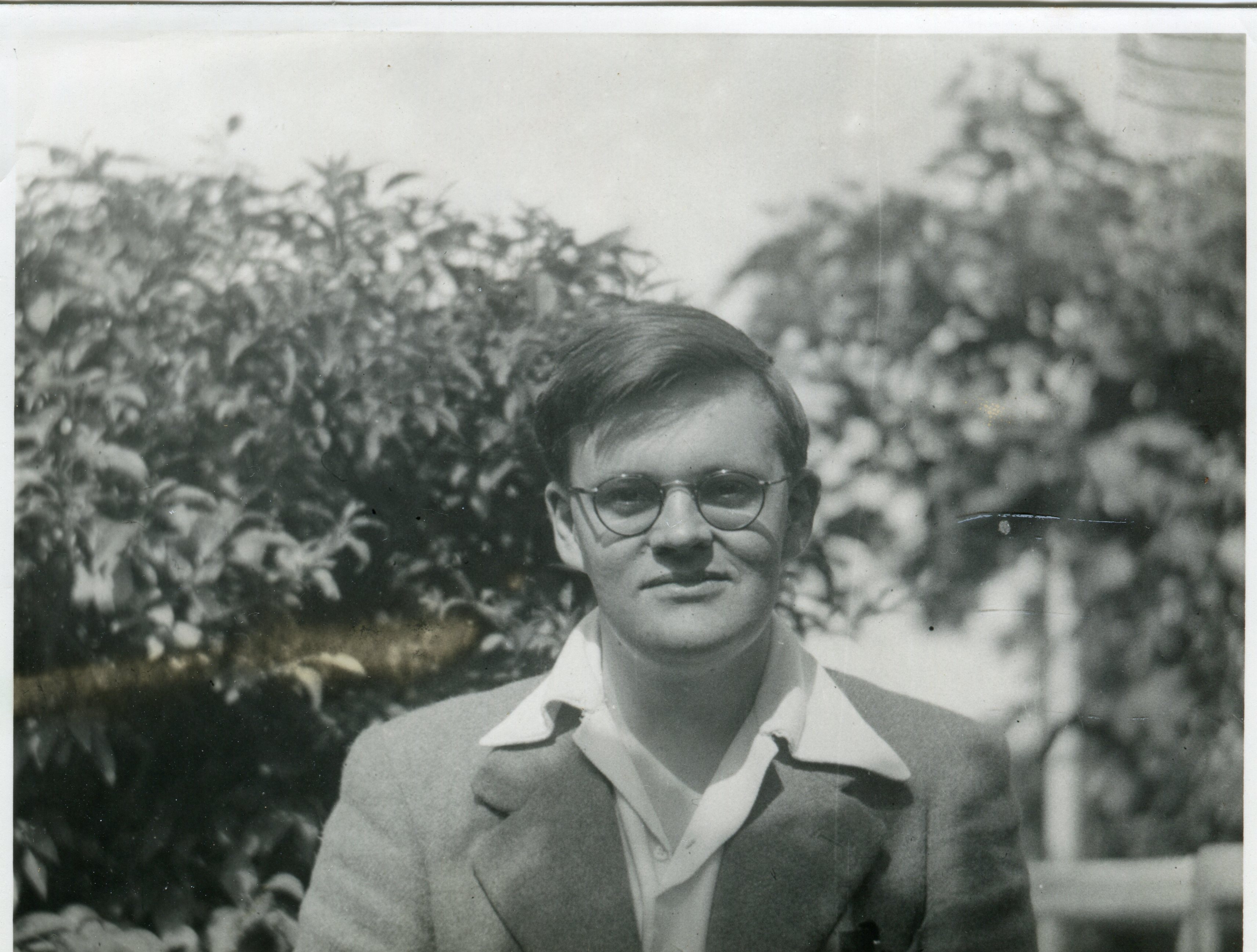
And so Albert exits, in pursuit of a moth. He appears settled in Torquay, which suits him better than his previous winter in Blackpool. I’m happy for him. In spite of war and its curtailment of freedoms, Albert was happy. And finally, here is Albert on his bicycle at Bullar Road, Southampton. He was 15 when this was taken, I hope you will forgive the anachronism. I found this photo in the album beside the one of my mother, so I thought they should be together.
Last year my Uncle, Peter Mabey, died. In truth, he was the last of the Mabeys; that family heralding from the Isle of Wight that I have made the subject of these posts.
Peter was the last person living who knew the letter writers; his grandparents John and Jane, his aunties and of course his brother Albert. Yet in that big box of letters that I inherited, there were none from Peter, save a few childhood notes to his sister when they were separated through wartime.
Uncle Peter was not an enthusiastic or reliable communicator; he seldom replied to my Mother’s letters and did not like to speak on the phone. But he did engage with these posts, which I knew because he would post a comment, or add a like.
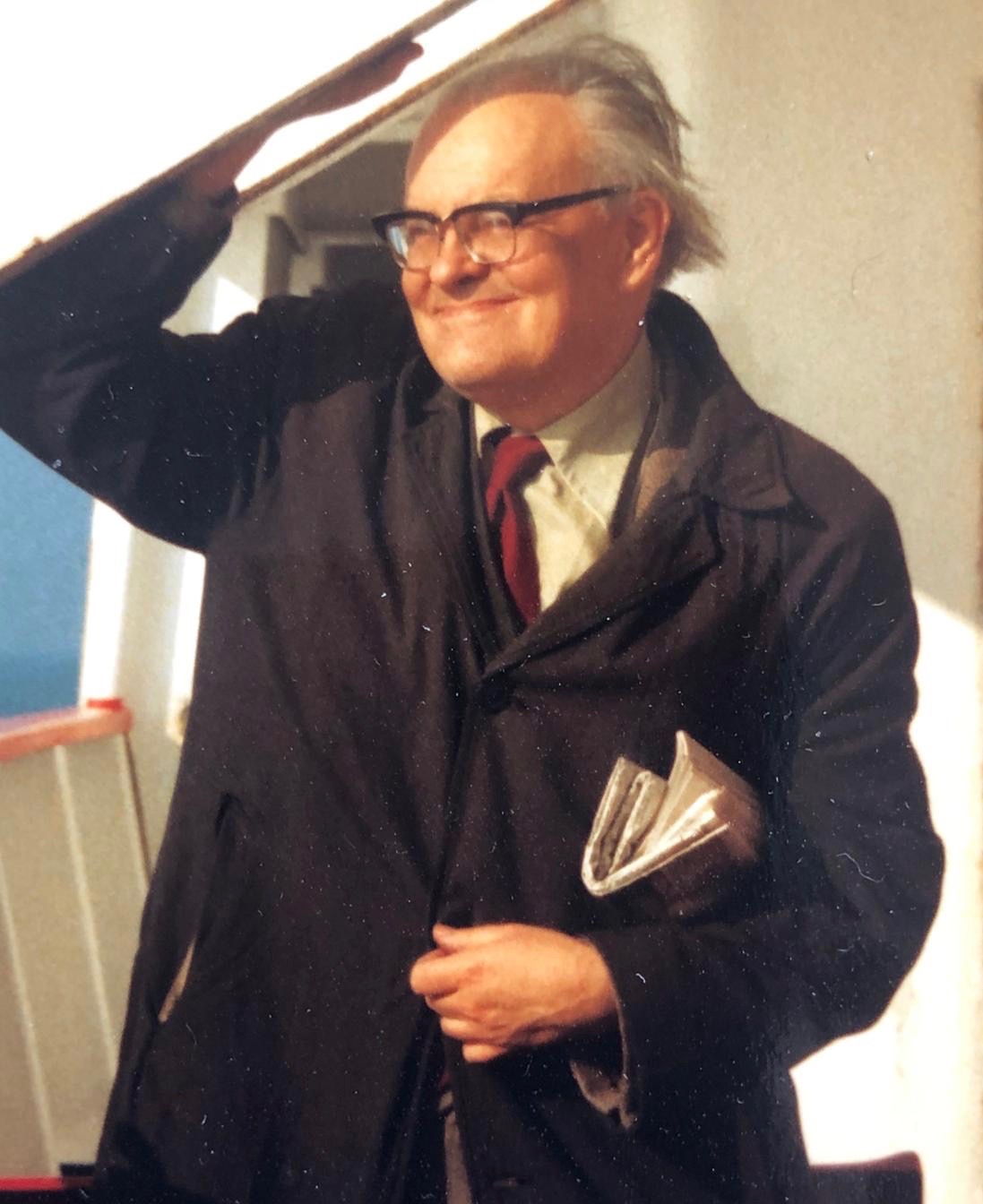
So, I have thought to add something about my Uncle here, important as he was to those who wrote and those who read. The following is a an edited version of the eulogy I wrote for his funeral.
Peter Hedley Mabey was born on 21st March 1926, in Southampton. He was the second child of John and May Mabey. Peter was a clever but shy boy, who looked up to his older brother and shared many hobbies and interests with him.
When living in Southampton Peter, like his brother, had won a scholarship to attend Taunton’s Grammar School. When war began, he transferred to Sandown County School, on the Isle of Wight, where he excelled academically. He took his Matriculation early at 15, and his examination results were of such a high standard that he was awarded an Open Exhibition to Cambridge, which meant that his fees were paid for, so this award was life-changing for Peter. His achievement was such that it was reported in several local papers.
So, aged only 16, Peter went to Cambridge University to study Mathematics at Selwyn College. In 1944, whilst Peter was still studying in Cambridge, his brother Albert, who was by that time a Flying Officer in the RAF, was killed in a plane crash. Peter felt Albert’s death keenly. I recall speaking to him, around the time of the 80th anniversary of VE day, when Peter told me that he could not attend the college’s victory celebrations, because for him, the peace felt hollow without his brother. It was clear to me, hearing the emotion in his voice, that Albert’s death saddened him still.
After graduating, between 1944 and 1945, Peter was employed by the Royal Aircraft Establishment and trained in structural engineering. Peter then moved to Cheltenham and worked for Gloster Aircraft, developing the Meteor, the first British jet-fighter. By 1962 he was their Chief Structural Engineer. Peter then moved to Hawker Siddley Aviation, working in the ‘Advanced Projects Group’. He spent time working on designs for a Mach-5 Hypersonic Ramjet – a type of ultra high-speed aircraft that is still, decades later, on the drawing board.
Peter tried for a job at CERN, working with the large Hadron Collider, and was invited to Geneva for an interview, but they were “looking for a better mathematician than me”. In 1966 he finally got into computing full-time and joined STC Research Laboratories in Harlow, as a Software Engineer, his skill being, “an ability to pick up a language sufficiently quickly to be pretty good at debugging”. Peter remained at STC until his retirement.
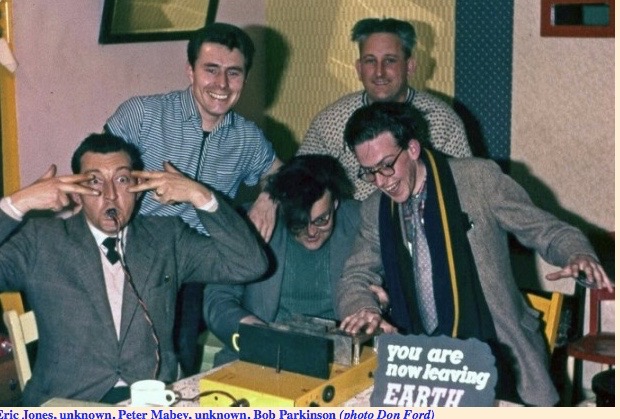
Peter was, and remains, the cleverest person I have ever met. He was fortunate enough to be a young man during an age of great technological achievements, when people with mathematical and logic skills such as his were making many innovations in the realms of computing and telecommunications. He worked in computing, designing and writing software at a time when most people regarded computers as the stuff of science fiction. Which leads me to talk about his great love of Science Fiction and the societies and conventions that celebrated this.
Although Peter was actively involved in what’s known as ‘Fandom’ for 60 years or more, we as a family knew almost nothing about this aspect of his life. But, if you type Peter’s name into Google, you will find plenty of information on the conventions and societies he was part of. One post regarding Peter describes him as, ‘One of the Backroom Boys’: “Britain has produced those patient, inspired characters who’ve come up with some of our greatest scientific and technical ideas. And without knowing a great deal about Peter Mabey’s real-world life I get the feeling that he’s been one of those boffins, working away in backrooms on truly ground-breaking stuff. Peter has been around for a long time but because he’s a steady, conscientious, reliable sort of chap he’s not the sort that usually attracts attention.”
Although people at these clubs and conventions indulged in the fantasy element of science fiction, just like Comic-Cons today, Peter’s interests were more in the realm of the possibility of life on other planets and theories of space travel – much in line with astronomers and engineers of the time. That said, he enjoyed the conviviality of these gatherings with like-minded people, and he maintained his links with fellow fans over decades, both in person and online.
When we were children, Peter stayed with us three times a year, Easter, Whitsun and Christmas. He always brought some wine, from his latest wine club holiday, to France or Germany or Spain. Peter travelled abroad regularly at a time when most people went on holiday to Devon, or in our cases ‘Wet Wales’. He always took photographs of these trips, which he made in to slides for his post-holiday meetings, but sadly we never saw them.
Peter was a kind man. He always remembered our birthdays, generously sending us cheques even when we were well into our twenties. He could be relied on for a WH Smiths token, a Parker Pen or the latest ‘Guinness Book of Records’ for Christmas. When he came to stay with us, he always brought a holdall full of old copies of ‘Private Eye’, ‘Which Magazine’ and The Sunday Times Magazines. And he brought us huge piles of computer print-out paper for us to draw on, a product of those room-sized computers he worked with. How welcome all that free paper was in our artistic household!
Whilst my sisters and I may have differing recollections of Peter’s visits, we all remember what it was like to play board games with him. I marvel now that he was willing to play Monopoly, Cluedo and other games with four, fidgety young girls, but he made no concessions for our ages. You had to follow the rules to the letter and you were told off sharply if you did not. Usually, Peter won those games; I guess it taught us resilience.
If Peter was not enrolled in to playing a game with us to while away the long afternoons, then he would escape to the front room. Sitting in an armchair, he would take a pen from the top pocket of his jacket and write indecipherable formulae onto a used computer programme card, several of which he kept in his inside pocket. He would do that for hours, always accepting the offer of a cup of tea (with a biscuit of course).
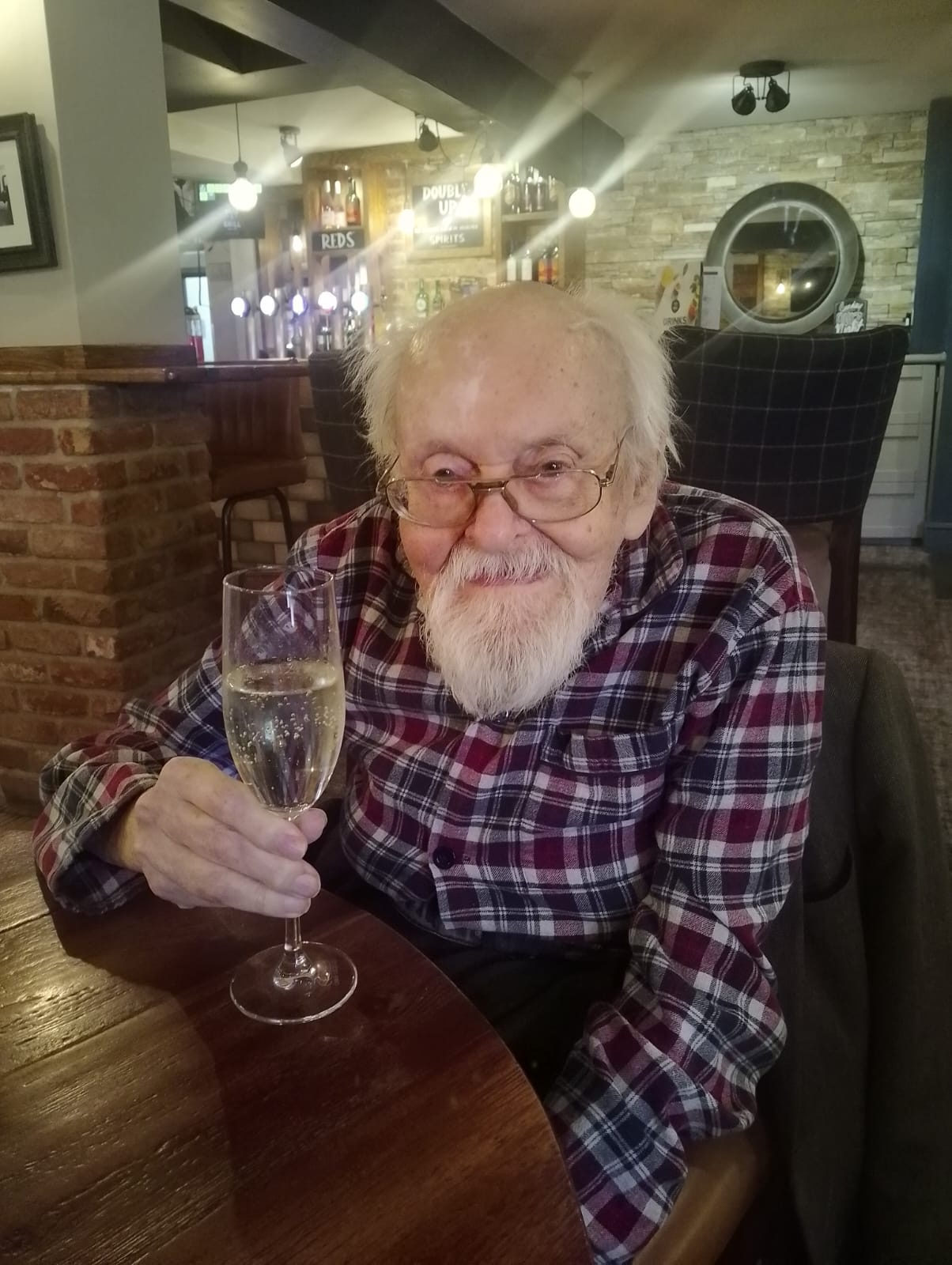
Whilst Peter’s body grew frail, his mind remained as sharp as ever. He continued his interests with Maths and science; through subscriptions to numerous magazines and journals, – the New Scientist, the Mathematical Society journal and MENSA. Finally, the time came for Peter to leave H… and the high-rise flat he had lived in for 60 years. When he came to C… we were relieved to know that he was safe and cared for. Peter was happy in the care home. He could continue his routine of watching ‘Countdown’ and could listen to ‘Radio Three’ as he posted on Facebook. I think that attending Scrabble club became a highlight of his week, and of course his skills quickly became apparent to all.
Peter was a man of great intellect, with a wide range of interests. I truly do not think that Peter was ever bored, he always had something to do. It’s true that he did not share much of his life, or his achievements with us. Quite possibly because his spheres of interests were not ones we comprehended, but more than that, I think Peter was a humble man. Completing a task, solving a puzzle pleased him; to boast to others about it was not in his nature. He did no harm on this earth. He supported many, many charities – ‘Oxfam’, ‘Wateraid’, ‘The World Wildlife Fund’, ‘Save the Children’ to name but a few. Peter was a quiet humanitarian. He was our uncle, our great uncle, our great-great uncle. Our family. He mattered to us. And we loved him.
What Peter would think of me making him the subject of a post I do not know. But I am certain that he would encourage me to ‘keep going’ with these posts. On one of the last occasions that I saw him, he read some of Albert’s as yet unpublished letters, ones that he had asked me to bring. I could see it made him happy to read again those words from his long-lost brother.
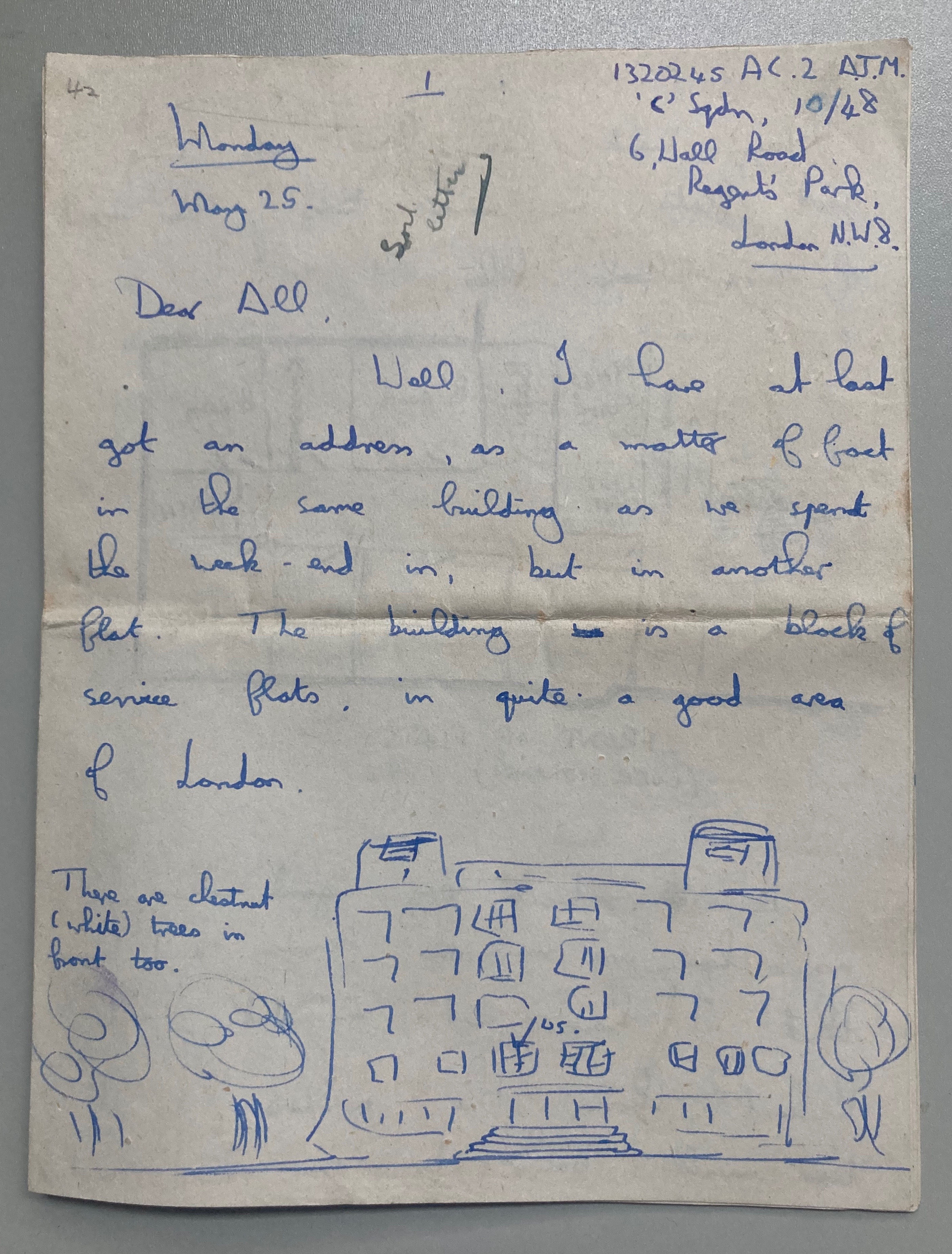
Albert’s drawing of 6 Hall RoadAs it is today; no white chestnut trees and an additional storey added.
Those of you who know London, or who are interested in cricket (count me out), will know that St John’s Wood is, in my Uncle’s words ‘a quite good area of London’. I might update his description with the words ‘exclusive’ and ‘unaffordable’, yet in 79 years NW8 has not changed that much at all, at least as far as buildings are concerned. Albert draws a rather good representation of his new accomodation, as you can see from the photos above. However, before he tells us about his arrival at 6 Hall Road, he has two short notes to share – one after his arrival back at camp (from leave I presume, given the gap between this and his last letter) and one from a mystery Y.M.C.A.
Friday May 22
Dear All, I forget whether I said I would write as soon as I got here or would leave it until reaching London, but here is a short note in advance.
I had an awful journey here and did not arrive until 6.45, very cross about everything. I will write at length later on. Tomorrow morning we go to London and should arrive about 11.30. I will write or send a card from there with my address. I have discovered my leggings here – I thought I had sent them long ago.
The pump is safe – my good friends here took care of it for me, and I shall take it with me to London.
I hope you are having a good time: I felt rather miserable on my return here, but feel more happy at the prospect of going to London.
Love to all, from Albert.
Saturday May 23. 4.30 pm Address unknown
Dear All,
Well, here I am in London, but as we are only in our present flat until Monday, I can give no address. At the moment I am in a Y.M.C.A. at Hornsey. I have been to Joyce’s house but no one was in. They may have gone away for the weekend, though since she was on holiday last week I rather doubt that. I am going back later to see, and may phone Shell Mex House to see if she is working. I may stop the night as since we are not really ‘there’ until Monday, nobody at St John’s Wood knows or cares if we are in. I will write as soon as I get an address, so until then cheerio, and love to you all at Branstone, from Albert.
P.S. It is just 12 hours since I was called this morning. (And 11 and a half since I got up).
P.P.S. If this were not Whitsun I could have gone home! (Won’t have a chance next week).
The following letter, twenty pages long, describes Albert taking advantage of what London has to offer; what a contrast to the wooden huts and windy, open countryside of Wiltshire! At last Albert’s basic training is over and he has been assigned a ‘flight’ for the next stage in his RAF career. He doesn’t sound too thrilled with the courses he has to take whilst in London, devoting much more pen and ink to his forays into the West End’s theatre land.
I was interested to read about his visit to Joyce’s house, who he knew from his work at Shell Mex. My mother told me that this Joyce (not his friend Joyce Hart) became his girlfriend, which is interesting because in this letter Albert mentions her ‘young man’ who was stationed in Andover. Well, I hope that future letters will give us more peeks into Albert’s affairs of the heart!
In researching background on why Albert was sent to London, I came across this interesting post that has lots of detail about the RAF base at the famous Lord’s cricket ground.
Monday May 25
Dear All,
Well, I have at last got an address, as a matter of fact in the same building as we spent the weekend in, but in another flat. The building is a block of service flats, in quite a good area of London. They must have been some quite good flats in usual times, the layout of ours looks like this:
It is not a very good diagram as there are numerous bends and bumps that I have not included; and I haven’t shown the windows as it is too much bother to go round counting them. The thick wall is an outside one.
This place is considerably stricter than Yatesbury, and we have to be up earlier, but since there are only four of us here who were already in the RAF before coming here, we will probably get off a bit lighter than the new recruits: I hope so.
The flat is quite a nice place with H&C water, two bathroom- lavatory –wash basin places, and the kitchenette with a sink and some cupboards.
There is not much facility for putting stuff away, I have a drawer in the kitchenette and a hook, but there is little room for one’s personal belongings.
The ‘course’ here appears to be negligible, though as yet we have done nothing. There is some morse which we have naturally done, some mathematics, which is probably very elementary, and various lectures, inoculations and some foot drill, but once again, we should not have a lot of that ahead of us. There also appears to be a chance of us getting another tunic and hat. By the way, you could perhaps send my spare trousers to be cleaned – I know they are not very dirty, but they are a bit wrinkled, and the creases, which I did under the bed, are in the wrong place.
This morning and afternoon we went down to Lord’s to be put into “flights” (that is what the 10/48 on the address indicates).
Most of the time there we were in the NAAFI or another canteen, or watching the cricket, which is Army versus Sir Pelham Warner’s XI. Quite a lot of wickets went down in a short while at the end of the morning’s play. Perhaps you heard the commentary on the wireless. A good number of civilians came in too, and some of them are now in our flats (‘Hall Place”). I expect Mr Abbess is somewhere around this way too, if he has not yet gone away.
As regards leave there is none, and they appear to be very strict on coming in at nights – 10.30pm, midnight on Saturdays.
After posting your letter on Saturday, I went to a barber’s and then phoned Shell Mex House for Joyce, and was told that she had gone to Andover for the weekend; I phoned her again for confirmation and found that they were out, so I went down to the West End.
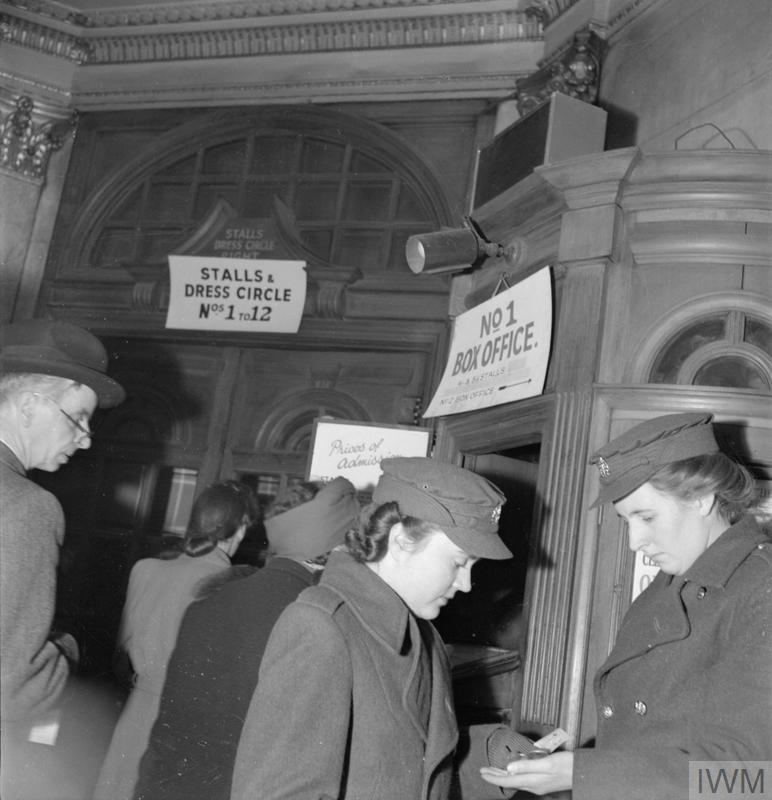
I had some tea & joined on a queue for the ballet at the New Theatre. Coming in the train to Leicester Square, I asked for the best station for the New of a man who turned out to be a Swiss, who had lived in the country for 20-odd years. He was quite an interesting fellow, talked to me about music, and was a great Bach fan, and finally showed me to the theatre. When I had nearly reached the door the gallery was full, so I had to search for further entertainment. It was not much use trying the theatres at 7.15 and not much fun walking around as it was raining a bit, so I joined another queue, for the New Gallery cinema.
The film was “How Green Was My Valley” together with a Donald Duck film and about 3 other shorts. I was in the front stalls (but the screen was quite a way back from the front seats) and paid 2/6 for the privilege. The next price was 4/-, then 5/6 and 8/- . If you want a really good “human” film I can recommend it to you. It is about the life of a mining family in a S. Wales village of about 40 years ago. It has happy & sad moments; some singing, few Welsh accents, but no strongly American ones, and is altogether very good entertainment. The Donald Duck (“Chef Donald”) was immensely funny, and one of the shorts was a good natural history one.
The show finished about 10, and I made my way by tube to camp, arriving without any rush at about 10.30. I went to bed about 11 and we lay in bed and talked until about 12.00. We still have no sheets, but the beds are quite comfortable, and don’t worry us much.

Sunday I missed breakfast, as it was too early for me. I rose at 8.30 and after messing around and nearly starting this letter, I went with another fellow to church. I went to St Bartholomew’s by Smithfield Market, and he to a nearby Catholic one. St Bart’s is an old Norman church (AD 1123) with small arches, a good roof, a sort of arched apse with Lady chapel behind, & triforium and clerestory. In spite of the ruinous condtion of most of the neighbourhood, the church (and market) are ok. The service was not greatly attended; there cannot possibly be many people still living there, so bad is the damage, but it was good with an interesting sermon, even if rather too long. I stayed for the Communion, which caused me to miss dinner.
In the afternoon I went to the Cambridge Theatre to hear a concert by The London Symphony Orchestra, but by the time I got to the box office, only 6/6 and 8/- seats remained – so I went away, rather disheartened. It was too late to go to The Albert Hall, as it was then 2.25, but I thought I might as well go along, as there are concerts in some evenings this week, and it seems necessary to book for things here. So I went by train to Kensington West, intending to walk to The Albert Hall by way of Kensington Gardens. I had not gone a great distance (I did not know if it was in the right direction) when I came across a phone box, and it occurred to me that it would do no harm if I were to phone Joyce’s house again. This I did and to my surprise, she was in, and had been stopping in all day, as in my note I said that I would call that day (that was written before I was told that she was at Andover). She asked me to come over, and I went to Kens. High Street, which was not far, and caught a 27A bus to Highgate and thence a 41 to Crouch End, where I found her in.
I had tea: they gave me egg (boiled), lettuce and beetroot, bread & butter and jam, and cake. I was quite hungry and enjoyed it.
In the evening we took a short walk, and talked indoors. I also had supper and after a most enjoyable evening, which turned what looked like being a miserable day into a jolly good one, I left at about 9.25.
I took longer over the journey than I need have done, as at Camden Town, where the 74 for St John’s Wood goes, I waited in the wrong place (the bus goes from a back street). Consequently I took an hour on the journey.
Joyce will be on late work this week, but her mother is alone there & would be glad of the company, so I shall go over some times in the week. Also I must see about these concerts at the Albert, Aeolian & Wigmore Halls. One fellow went to the Albert Hall on Sunday and said there was plenty of room, so I shall probably get in without booking, which is better since my spare time is a very unknown quantity.
I think that covers most of my activities up till now. I am writing this in a Church Army Canteen just opposite tot the flats. It is raining and I have plenty to write, and so shall go no further.
I believe I did not tell you about the journey to Yatesbury. Stale news, so if you are not interested, read past.I saw a Corporation bus go just as I passed the clock at the bottom, and had to wait a good 15 minutes before a Hants & Dorset turned up. I passed the Civic Centre at 1.52 & saw the smoke of a train leaving as I was at the top of the new road. That was probably it. As the ticket collector told me next train 3 something. I made for the top of 4 post hill (Hobbs) and caught the 2.0 bus to Salisbury: I might as well have gone by train. When we passed the exit of the Sarum bus station, the Devizes to Marlborough bus was in, when we had gone round the block and got in, it had gone out – missed it by the skin of my teeth again! The next transport was a Bath bus to Devizes at 4.40, which I caught. That got me to Devizes at 6.05, and after walking about a mile in sultry weather and greatcoat & kit and getting even hotter and crosser, I was picked up by about the 100th car that passed me. Glory be it was going to Yatesbury, passing by the camp, and I eventually rolled in about 6.45, very annoyed with things.
I got my £1 pay today, and have about £2, 10s left, which will probably see me through the next ten days – that should be about all we are here.
I don’t think there is much else to say. I will write again in Wednesday or Thursday. I expect letters should reach you quite quickly from here. I trust that you had a good Whitsun weekend, with not too much rain. So love to all from Albert.
P.S’s. Excuse the writing. I have a lot to write & am in a terrific hurry. It is 7.45 and I hope to get 2 or 3 letters done before bed.
Joyce had not gone to Andover (her ‘young man’ is there in the Tank Corps) and there was no accommodation available.
This canteen is in a very large and what was once posh house. It is a jolly nice place and they have good fresh cake, though no hot meals.
We also filled in reams of forms today. My RAF records must contain the same stuff in about octuplicate.
Is it just me or does Albert grow in confidence? It must have felt good at least to no longer be a new recruit, as some of his flatmates were. I sense the feeling of accomplishment he has in navigating his way east and north across London, to Smithfield and to Crouch End. Albert is becoming a cultured man, seeking out the ballet, conversing with a Swiss gentleman about music and Bach. His reason for attending church a way across town must have been to see the architectural beauty of a renouned Norman church and to express his knowledgeable appreciation to his parents, using triforium and clerestory as examples of his learning. I looked up these words for you – ‘triforum’ is space in a church above the nave arcade and below the clerestory extending over the vaults, or ceilings, of the side aisles. ‘Clerestory’ is the high space above the nave that contains a series windows. He’s a man that appreciates fine architecture and Donald Duck, I love him for that.
I enjoyed reading of the discoveries Albert made; I felt like I was going along with him. It’s a lovely gift to have all these years later. For whether your interests are in learning about wartime London or discovering what comprised tea in 1942, there is something for everyone here, wouldn’t you say?
Albert’s letter of Wednesday 6th May 1942 relates the second half of his day out to Inkpen Beacon; another mammoth excursion by bicycle. He tells us of a couple of mishaps, one of which was the loss of his map in the area of Linkenholt. This little village is wholly owned by the Linkenholt estate (as it was in Albert’s time) and therefore little has changed since those times. You can’t buy one of the pretty houses, they are all rented out by the current owner, who bought the estate for £25 million in 2009.
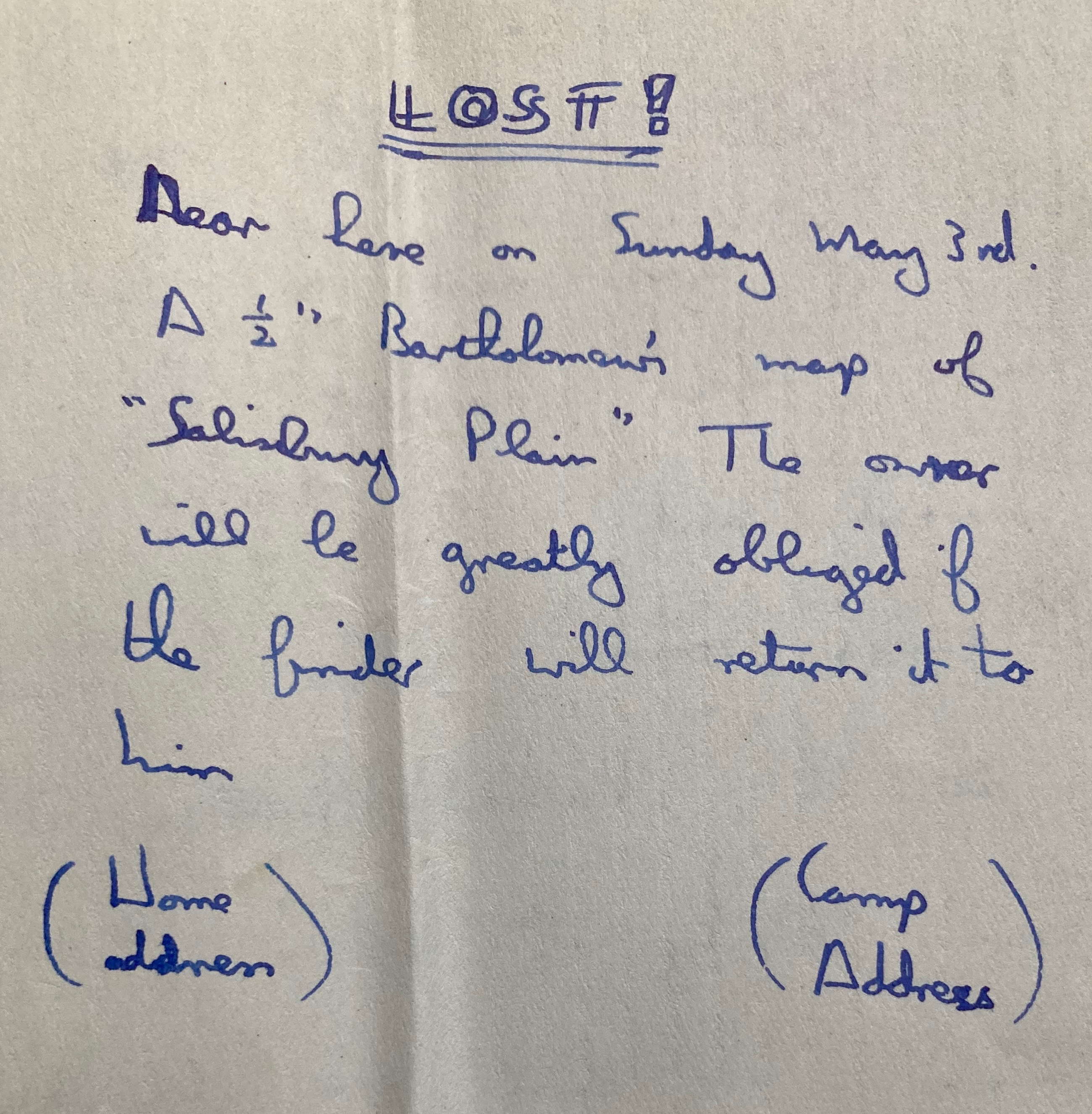
Well, back in 1942 it was ‘E.Sharpe’ who kindly found my Uncle’s treasured map and returned it to him. His brief but charming letter is reproduced below. I have spent some time today trying to find something more about this gentleman, but without success. I was able to find a record for his dwelling in the 1939 Census, but all the names, except that of the cook, have been redacted. If you are interested to know why, take a look here (it’s too complicated to explain!).
Dear All, I think I will continue this letter where I left off the last one – at Inkpen Beacon (though of course I’m not there now) and go on recounting what happened in the ride.
I went down a pretty steep hill into Combe, or Coombe as I believe it is correctly called. (The map says Combe, but W.H.Hudson, the Parish notices & memorials in the church all spell it with the double ‘o’). The village is very tiny and consists of a church, a farm and a very few cottages, without, as far as I could see, even a shop. I went into the church and found that the parish is Coombe & Foccombe (Coombe in Berks., Foccombe in Hants). There was soon to be service and just before I left, the rector of the joint parish came in, an old, frail man. I had a few words with him – he knew Hudson’s book – and then proceeded down the road, past what must be a very isolated searchlight post, to a crossroads, from which the road climbs and turns to Linkenholt, in Hampshire: the border is about where the searchlight post was (or perhaps it should be vice versa).
At Linkenholt I stopped and went to the church door, but as there was a service in progress I did not go in. From there I went to Vernham’s Street, where I posted your letter, and about 100 yards on I stopped for a drink at a wayside tap. Looking round on the carrier, I saw that the map was not in its place. I had tied the map, the writing paper and my gas mask on but somehow the map must have dropped off. I was very worried and went all the way back to the crossroads, where I had last looked at it, without finding it. Of course there were plenty of people about when I went along the first time (and lost it) but on the other two journeys, not a soul. However, I thought whoever had picked it up must be a local, and would only need a little prompting to return it – perhaps not even that. Just to make as sure as possible I penned a note which I put on a Home Guard hut, the front of which was used as a notice board:-
Yesterday, by the second post, your letter & my map arrived, the enclosed letter with the map. I have replied to it this morning.
From Vernham’s Street to Vernham’s Dean by memory, and I found it a very nice little village, with a village pond and green, and neat little thatched cottages. I asked the way of a postman – Burbage I said, as it was the first place I could think of that I was going through. I followed the main road to Foxbury (just in Wilts) Oxenwood where I asked the way to Great Bedwyn, and again where the road crosses the A338.
I found Great Bedwyn alright, and went into the church there which is pretty large and very good. I followed the road by the railway and canal, as I could see from the map in “Highways and Byways” that they crossed the road near Burbage. Of course that map is hopelessly inadequate for cycling, as there are only a very few roads marked. However, I got along quite nicely, through Crofton, just past which I decided to stop and eat the remainder of the date cake. Just as I ran down off the road to the canal side my front tyre burst, much to my annoyance, so after eating the cake I had to mend that, which however did not take me long. I must think about getting a new tyre if that one is any more trouble.
My little road became quite rough and led away from the railway and by Wolf Hall into Burbage. From there I simply had to follow the main road (which was very quiet) through the western edge of Savernake Forest to Marlborough.In Marlborough I got something to eat and drink.
Alfred Brown’s dairy later merged to become ‘Brown & Harrisons’.
In a pub there (where I had some very nice cider) I met an old countryman who was actually a native of Charminster, though now living near Marlborough. He had also worked for some time as cowman for Alfred Brown’s of Southampton for a number of years, until 1920 I believe. He knew the town well and we had quite an interesting talk. I noticed that he called Great Bedwyn ‘Big’ Bedwyn. I recognised his Dorset accent as soon as he spoke to me, saying that is had been ‘waarm’ that day.It certainly had been a lovely day, and despite the two little mishaps I enjoyed it very much.
Today I fell for some work, though not of a very exacting nature. I was a “marker” for the cross country course, and actually all I had to do was sit out on one of the training gallops near Beckhampton. I wrote some of this letter whilst I was there. This evening I shall quite likely go for a little ride, perhaps through Compton Bassett
I hope then to see you this Sunday, May 10, at Salisbury in the Cathedral Close some time during the morning. I should advise you to bring some dinner, as the town is very crowded on Sundays. It certainly looks as though the weather is going to treat us kindly; I certainly hope so.
I cannot remember anything else to answer in your letters, so I suppose I shall have to waste the rest of the page. One more thing – it would be quite nice to have a cake.
All the usual love, from Albert.
It’s nice to think of Albert looking forward to seeing his mum and dad in Salisbury (and expecting cake too). The arrangement to meet ‘some time in the morning’ speaks of a different age, when all parties were reliant on slow and sometimes unpredictable public transport. Unfortunately we won’t get to hear anything about their excursion, as the next letter I have from Albert is dated 22 May. He has left Wiltshire and all its beauty behind, stationed in London, “address unknown.”
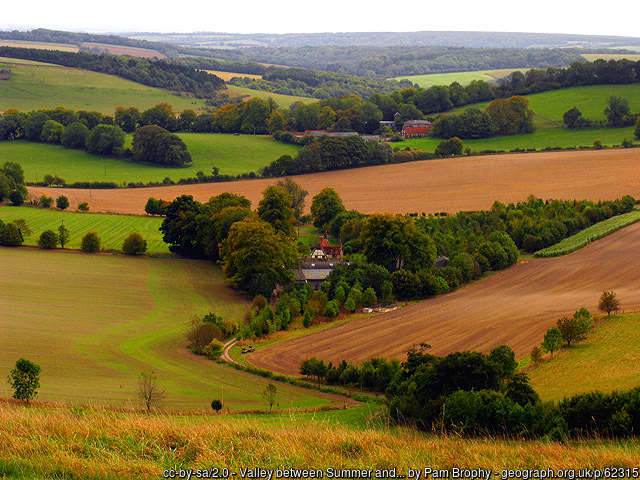
A view from Warlbury Hill, also known as Inkpen Beacon
This week I publish just one of Albert’s letters, written on a Sunday afternoon atop the highest hill in Hampshire. Take away the date and this could have been written at any time in the twentieth century; there is no flavour of war here. Indeed should you be a reader hungry for history regarding the RAF in World War Two, then I’m afraid there is little for you here. If, like many of my regular readers, you seek the common threads of humanity in the words of those long passed, then I invite you to read on.
1pm, May 3 Sunday 1942 Inkpen Beacon
Dear All, I am looking down towards Hampshire from the South side of Inkpen Beacon. The best view and what a marvellous view it is, is looking north to Berks. & Wiltshire, but it is too windy to write letters there. On this side there is just enough breeze to prevent the sun from being uncomfortably hot. Even from here it is very nice looking down the road to Combe which you will see is walled in on three sides by the downs. For a good description of the village and surrounding country see “Afoot in England”. As a matter of fact it was reading that book which made me visit the place today & it certainly is worthwhile.
“The top is a league-long tableland, with stretches of green elastic turf, thickets of furze and bramble, and clumps of ancient noble beeches—a beautiful lonely wilderness with rabbits and birds for only inhabitants. From the highest point where a famous gibbet stands for ever a thousand feet above the sea and where there is a dew-pond, the highest in England, which has never dried up although a large flock of sheep drink in it every summer day, one looks down into an immense hollow, a Devil’s Punch Bowl very many times magnified,—and spies, far away and far below, a few lonely houses half hidden by trees at the bottom. This is the romantic village of Coombe…. that small isolated village in its green basin—a human heart in a chalk hill, almost the highest in England.”
“Afoot in England” W.H. Hudson
I came to Hungerford on the main London road. Although it is such a busy road, there was not much traffic today after I had passed by ‘an army convoy’ before & just after Marlborough. I started from camp at 10am, and so avoided what few joyriding motorists remain. In Marlborough I saw a good example of how the British Army carries out manoeuvres; coming down on the London road I encountered one of the light trucks leading some heavy lorries up a side road. As they came to a turning the driver put his hand out to the right, and an officer standing up behind him promptly put out his hand to the left. Apparently they didn’t know which was the right road, though there were three sorts of police fellows about and about 2 one inch maps to each car.
Along the A4 between Marlborough and Froxfield I saw what seemed to be Berberis growing and blooming by the roadside. Froxfield is quite a nice little village by the Kennet. It has some rather nice looking alms houses, called Somerset Hospital. Just a minute & I will see what “Highways & Byways” has to say about them – apparently they were built in 1691 and enlarged in 1775 “by the right noble Sarah Duchess Dowager of Somersetdeceased.”
In a farmyard at Froxfield I saw an old stage coach in a very dilapidated condition. Just out of the village is the Berkshire border and from there it is not very far to Hungerford, where I left the main road. I went through a lovely common just out of Hungerford, and took the quickest road to Inkpen, which is quite a small village, some distance away from its church, which I did not visit.
Though I took it to Calne on Thursday, my 3-speed was not yet ready yesterday, so I have been running with more or less fixed gears. Just before reaching Inkpen though, I fixed the gear in middle, by means of a piece of wire & the chain I usually lock it up with. I need a lower gear than top in this part of the journey.
I reached the hill here at about 12.30, and before writing this I ate half the date cake. I took that as I thought that of all the eatables, it would travel best. Incidentally it is a very nice one. If I can find a piece of string I will now measure my mileage up to date: if I am to believe my cyclometer it will be about 25. And not very far out either, it is actually about 23. I see from the map that I was wrong in saying that Froxfield was by the Kennet; that river does not run close to the main road again until Hungerford.
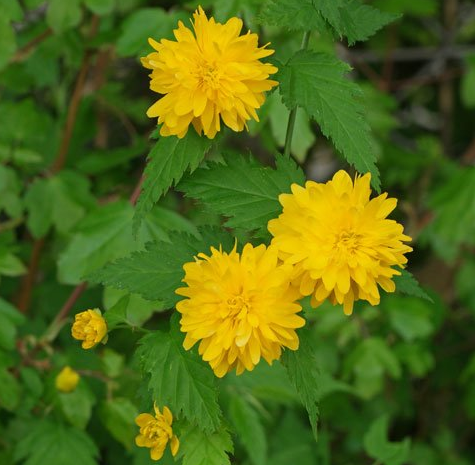
Kerria Japonica
I have seen quite a lot of Kerria today, as well as wild cherry blossom and all the usual spring flowers. I saw some wild bluebells on Thursday. At the moment I can also hear a cuckoo in the woods below.
On Thursday, after I had taken my 3-speed in to be repaired (by Friday he told me) I went out of the village north-westwards, on a little road between A4 and B3102. After about two miles I turned right and went along a road which overlooks the plain of the Avon. Though the road was never more than about 410 feet high, the view was pretty extensive and as the sun was coming through the fresh green foliage, from the west, it all looked very lovely. As I only decided in Calne to go for the ride, I had not my map with me, but by various little lanes I managed to find my way to Compton Bassett, crossing the B3102 just north of Hilmarton, and keeping south and west of Highway. Compton Bassett is a very long village, which straggles along the lane for a distance of about a mile. I suppose I should not say “straggles”, as it is one of the neatest & best kept villages I have come across. Most of the cottages are whitewashed or cream washed and have tiled or smartly thatched roofs and well tended gardens, many of which are terraced up the hillside. The church I did not visit, as it was too late in the evening, but it is a Perpendicular building which looks very good from the outside.
Between Compton B. and the main road is an RAF camp which takes its name from the village. Its situation at least is much better than ours as regards immediate surroundings, and it is doubtless neither so cold or so windy.
By the way, the parcel arrived quite safely on Saturday by the second post: they seem to be a bit slower in transit of late.
Excepting that I must try to see Mr Bryan one night, and that I must go to Calne tomorrow & get my 3-speed wire (I hope) and a card for aunt Daisy, I think there is little to say in reply to your letter, so as it is getting a bit uncomfortable here, and also it is 10 past 2 and time to push on, I will be closing now.
I will post this in Combe or perhaps somewhere in Hampshire. I suppose it will not be much use sending love to Auntie Edie as she will have gone before the letter arrives, so love to all at home, from Albert.
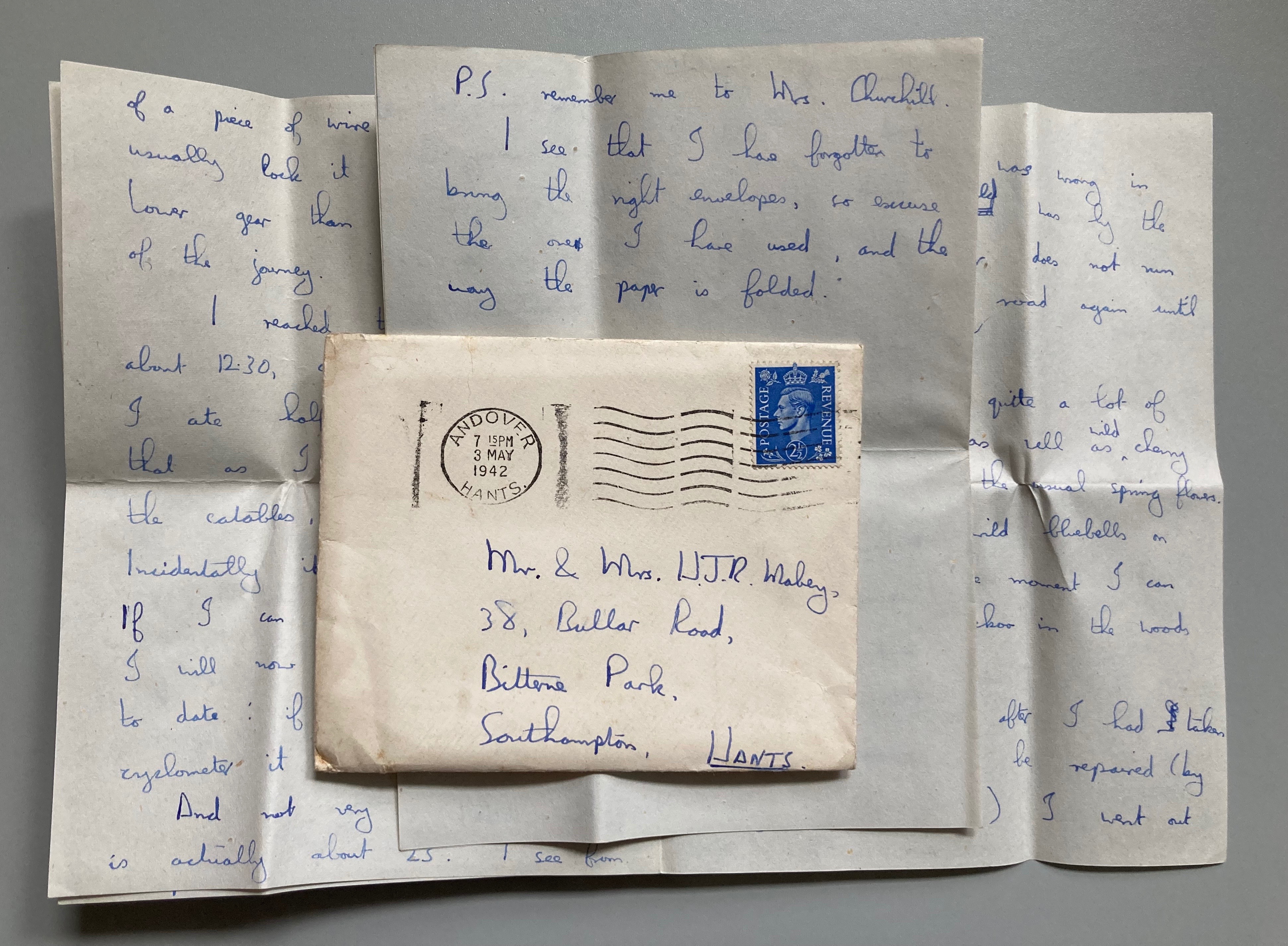
P.S. Remember me to Mrs Churchill. I see that I have forgotten to bring the right envelopes, so excuse the one I have used, and the way the paper is folded.
In the course of this endeavour of mine, which has mostly centred around Albert’s letters (as they far outnumber those of my other Mabey relatives) I have gained a great deal; not just insights into times gone by but also an exploration of hidden memories of my own. In this letter Albert invites me to remember the Kerria that grew in the front garden of my childhood home, rather too ‘straggling’ for my Mother’s liking. Albert casts my mind back to the tall bookcase in the living room filled with faded linen covers, “Highways and Byways”, “English Downland” that I ran my fingers across on drowsy afternoons. He calls to mind the singing grasslands and dusty chalk paths we tramped along, with Mum and Dad ahead of us, four girls lost in our daydreams. Albert, dear and gentle soul, invites me to memories that are distant and sweet.
“Today my brother Albert would have been 100, and I can’t help wondering about what mission he had been training for on his last flight in 1944. He was the navigator of a Beaufighter and flew into a Scottish hill in cloud, after an instrument failure.
We were never told what the flight was in aid of, but when the story of our attacks on Hitler’s heavy water plant in Norway came out, we guessed that it might have been relevant, although as far as I find now, low-flying air support wasn’t used at that time.”
So today I’m thinking of my dear Uncle Peter, as he thinks of his brother. But it’s true to say I’m thinking of Albert too, feeling like I have got to know him through these letters. Once again I have fallen behind with writing my posts, so I cannot share with you what Albert was doing on his birthday in 1942, when he would have turned 21. However he chose to celebrate it, it would have been away from RAF Yatesbury as Albert’s course was due to end in a few weeks. How much Albert had already experienced in his young life – for all the hardships and loneliness that at times befell him, Albert’s life was certainly filled with adventures in these war years.
Wednesday April 22
Dear All,
I am afraid that I won’t have much to say in this letter. I am going to pack up a parcel tonight, but as it may possibly take until Monday to reach you, I shall post the letter separately.
I was going to go to Devizes tonight but the weather is rather grey and cloudy so that the ride would not be particularly good, so I shall be able to do my letter writing in the hut. Not at the NAAFI tonight, as there is a dance on.
Another thing we should have done was gone on a flying trip yesterday – not much more than a joy ride, in one of the two-engined D.H. planes that Jersey Airways had, but it should have been a nice break from the usual work. The day was very misty though, & there was no flying – the first day since it began that there has been none. We hope for better luck next week.
I tried my filter on the Voigtlander & found that it does fit – rather to my surprise. You may remember that I soaked the cement out and have the two pieces of glass & the gelatine, so before that can be used I shall have to re-cement them together, but I maybe able to devise some method of fixing the other (gelatine in cardboard) filters to that filter holder.
By the way, I hope you can get my pen, as this one is behaving very badly; the joint where the nib & feed screw into the barrel leaks and whenever I write a letter I get covered in ink. I’m afraid I have no more to say, except goodnight & love from Albert.
Albert’s next letter contains details of a mammoth bike ride from Calne to Bath, there and back in one day. Knowing what I know now about Bath’s fate (see ‘More of Albert’s Travels’) it was particulary poignant to read of Albert’s pleasant afternoon in the as yet undamaged city. Later in the letter I felt a chill as I read of the ‘enemy activity’ that Albert heard in the early hours of Sunday morning. Those bombs fell not on Southampton, Bristol or Avonmouth, but on the very city that he had visited just hours before.
Sunday April 25
Dear All,
I think I will start this letter in the morning as if I go out I shall not write until tomorrow. Furthermore the weather is becoming cloudier and I am a bit doubtful about it.
I do not think that there is a great deal to reply to in your letter, except about going to Salisbury. When I said “week after next”, I should have said Sunday after next, meaning May 3rd, though actually week after next is perfectly correct. Anyway it doesn’t matter which week it is, though May 10 is fairly near the time I should be leaving here. However, I leave it to you, & will wait to see what you think about it in your next letter.
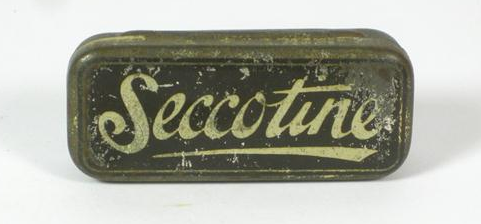
One more item is my pen. I think that it would be as well to not cancel the order, as you would have to wait at least as long to get another. At the moment though, this one is going very well, as I cured the leaks with the aid of cotton and Seccotine. I forget whether I told you that the pen I bought in Blackpool fell to bits and I bought another in Calne, still a Platignum, but with a better nib & transparent barrel. The nib is smoother and finer too.
Yesterday was our sports & spring cleaning day – something which occurs every month, though we missed the last one because we were on our weekend. On Friday I took my bicycle to the lane at the back of the camp, and parked it on the field side of the hedge. Then yeaterday I got an early dinner and whilst everyone else was feeding I betook myself across the playing fields and collected the bike. Until then it was my intention to go to Marlborough and do some shopping, but it was a lovely day, though with a strong easterly wind, and as it was only 1pm I decided to go to bath instead, especially as I should not again get the chance of going on a Sunday.
So I set off, at a good pace as I think that the road is easier in the eastwards direction and the wind was pretty strong. It was hot too & I soon took off my hat and unbuttoned my tunic. I think my times were Chippenham 1.45 , Bath 2.40 – a very rapid journey.
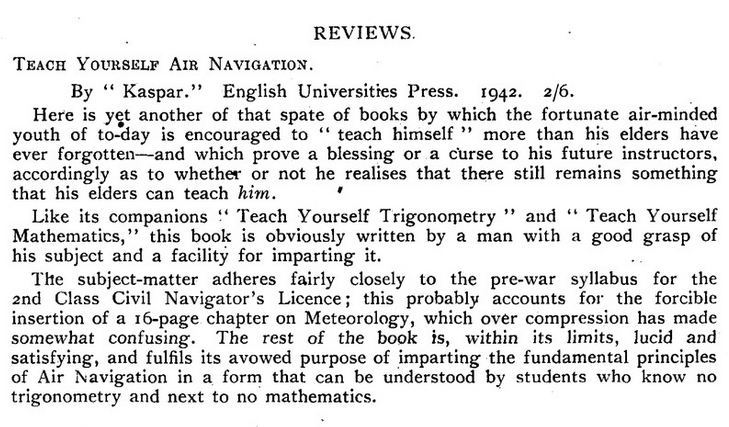
I parked my bicycle in one of the smaller squares or courts in the city & walked round seeing the sights. Though I had plenty of time there I did not see as much as I would have liked to have done. I delayed seeing the Abbey until after tea, and then found to my disappointment that it was shut. I did however see some of the old buildings, including the Baths and most of the shops. There are some good parks too, & in one of them I saw a good length of hedging – all forsythia. There were some lovely almond blossoms too. I spent plenty of money; apart from little things I got the Pocket Oxford Dictionary, “Highways & Byways in Wiltshire” (Like Mr Wills’ Dorset book) and a book called “Teach Yourself Air Navigation.”
Review of Albert’s purchase in ‘Aeronautical Journal’ March 1942. It seems Albert did not consider his instructors’ knowledge sufficient!
I was lucky to get some tea without queuing up for it, though it only consisted of toast and cakes. Going by the Theatre Royal I saw that the Sadler’s Wells Ballet is visiting next week but I do not see how I can possibly get ther for an evening next week – the only late trains are on Saturdays.
I had supper at about 7.30, in the same place as we went when we went to the concert there. Then, at 8.20, I left by the same main road to camp. The wind had not, as I hoped, dropped with the evening but was still strong as ever, & remained so all night. To Chippenham the journey was not so bad, as the sun was still shining & I seemed to get along fairly well. I saw a field of cowslips past Corsham and several people with wild bluebells, though I have not seen any growing, nor have I yet heard the cuckoo. I went by Chippenham church at 9.30, as it was getting darker, and from there my speed dropped rather, though I reached Calne at 10.10 or just before. Then came the worst part of the journey, from Calne to camp in the dark, all up hill and the wind getting stronger as I climbed. I should think it was about quarter or ten to 11 when I finally got inside. However, despite the ride back (which was not really too bad) I thoroughly enjoyed my day’s outing.
Last night there was some enemy activity, with flares being dropped fairly close, I hope that it was not Southampton again. It seemed to be more Bristol or Avonmouth.
Today I do not think that it is suitable for going far. I had had some idea of venturing as far as Inkpen and Combe, about which W.H.Hudson write so well in “Afoot in England”, but it is rather windy for venturing that distance. Actually I suppose westwards, Chippenham way, would not be so cold, but that would mean I should have a headwind on the return journey.
As I expected I had not enough to say to fill another large sheet, hence the smaller piece of paper. You will see about where I go today by the postmark – if I don’t forget to post it! Anyway love to you all, from Albert.
P.S. Thanks for Raymond’s letter, I hope to reply to it soon and then return same to you to read. That reminds me that I have a couple of airgraphs to post to Phil.
“The moonlight never attained the hard brilliance which you get on really clear nights, it was a good gentle light though.“
In the time between Albert’s prevous letters and these, he has spent another weekend at home in Bitterne Park. Once again I wonder what did he do with his weekend, with my grandparents, perhaps my Mother? It makes me a lttle sad that I will not, through reading Albert’s letters, have any more than glimpses of his home life, nothing more substantial than that. So instead let’s enjoy Albert’s appealing narrative of his return journey from Southampton to Calne, culminating in a moonlit cycle back to camp.
Monday morning 7.30am March 30
Dear All,
I arrived here OK at about 12.30 am – late due to a bus breakdown, of which more later. It was not a bad journey though and a lovely night for cycling. I find that I have left my toothbrush (a blue one) in the bathroom, perhaps it could be sent on in the next letter. I shall write again tonight & Branstone, so love to you all for the present – Albert.
March 30
Dear All, I hope you received my short letter on Tuesday morning. The journey you will have guessed, was not a very good one as regards speed. I got on the Salisbury bus, with a seat, and travelled there as per timetable. There was a relief run, but it turned back at Plaitford and after there quite a number of people were unlucky. There were great crowds at Salisbury bus station, and in the town itself. Salisbury appears to be quite full of army and air force on Sundays. There was too much of a crush for me to eat my sandwiches in the waiting room, but I did not feel hungry. The Marlborough bus was not filled until some way out, but before we reached Upavon they were passing waiting people.
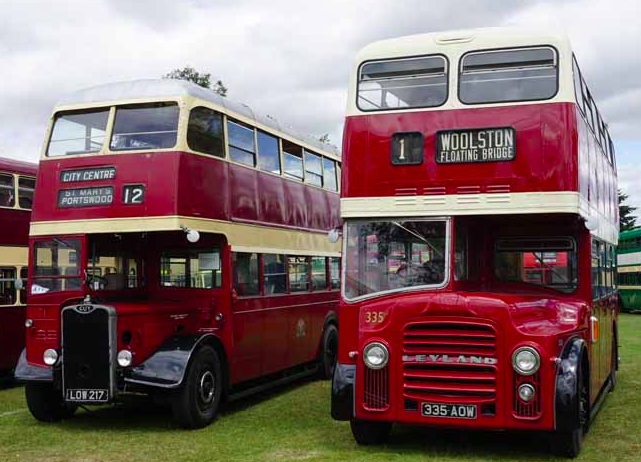
Two old Southampton buses
At Upavon the bus went on to Devizes & the Marlborough passengers had to change to a single decker. There our troubles began as we were told that the bus had to go along the Devizes road to pick up some Marlborough passengers from a bus which had broken down. We went nearly all the way to Devizes, to the railway bridge, & found that there were only about 2 passengers for Marlborough. We took some Upavon ones too. The bus then went back almost to Upavon and on the main Marlborough road.
I did not look at the time at Marlborough but I should think that it was about 11.30pm when we arrived. I went down to my garage and knocked up the people. At first I got no reply, & began to wonder if I was in for a walk, but eventually the woman came & unlocked the door. She did not seem to mind my being late though.
I tied the parcel on the carrier & left at what I suppose was 11.45.
I did not hurry and it was a perfect night for cycling – no wind, warm & light. I enjoyed the journey in spite of the late hour. The clouds gradually cleared as I went along, although the moonlight never attained the hard brilliance which you get on really clear nights, it was a good gentle light though.
I saw a few cars on the road and several lorries travelling in the opposite direction. About halfway along I came across 3 Army Bren carriers, one of which had broken down, & was being hitched up to another. I saw and heard several peewits which seemed to be quite active in the moonlight. Two of them were certainly performing all the usual acrobatics.
I arrived at camp at 12.30, being one of the last to arrive, except those who missed their train and did not turn up until this morning. I ate two of the sandwiches, leaving the others for this mornings break. I feel a bit sleepy today but not really tired, as I might have expected.
I think I was very lucky as regards weather, as today is quite misty and damp looking, though not unduly cold. I should not be surprised to see some rain though, and must put on that saddle cover tonight. That reminds me that I did not bring my pump with me. Also that I could have done with an oilcan, as the dynamo sounds as if it’s a bit dry. However, I can borrow these things.
I suppose Peter will have had his teeth done when you receive this; I hope he is alright. I hope Jean is well and happy too. Goodbye, & my love to you all, from Albert.
P.S. I hope you get the parcel sent on Weds, possibly Tuesday, but I shall probably not write until Thursday & even then cannot think that there will be much to say – so prepare for a short letter!
Later: I have just written to Branstone, telling of my journey.
Even Later: I have just, in spite of opposition, managed to listen to the latter part of the broadcast od “Love the Magician.” Had I known it was on, I should have listened to more, though no doubt opposition would have been greater.
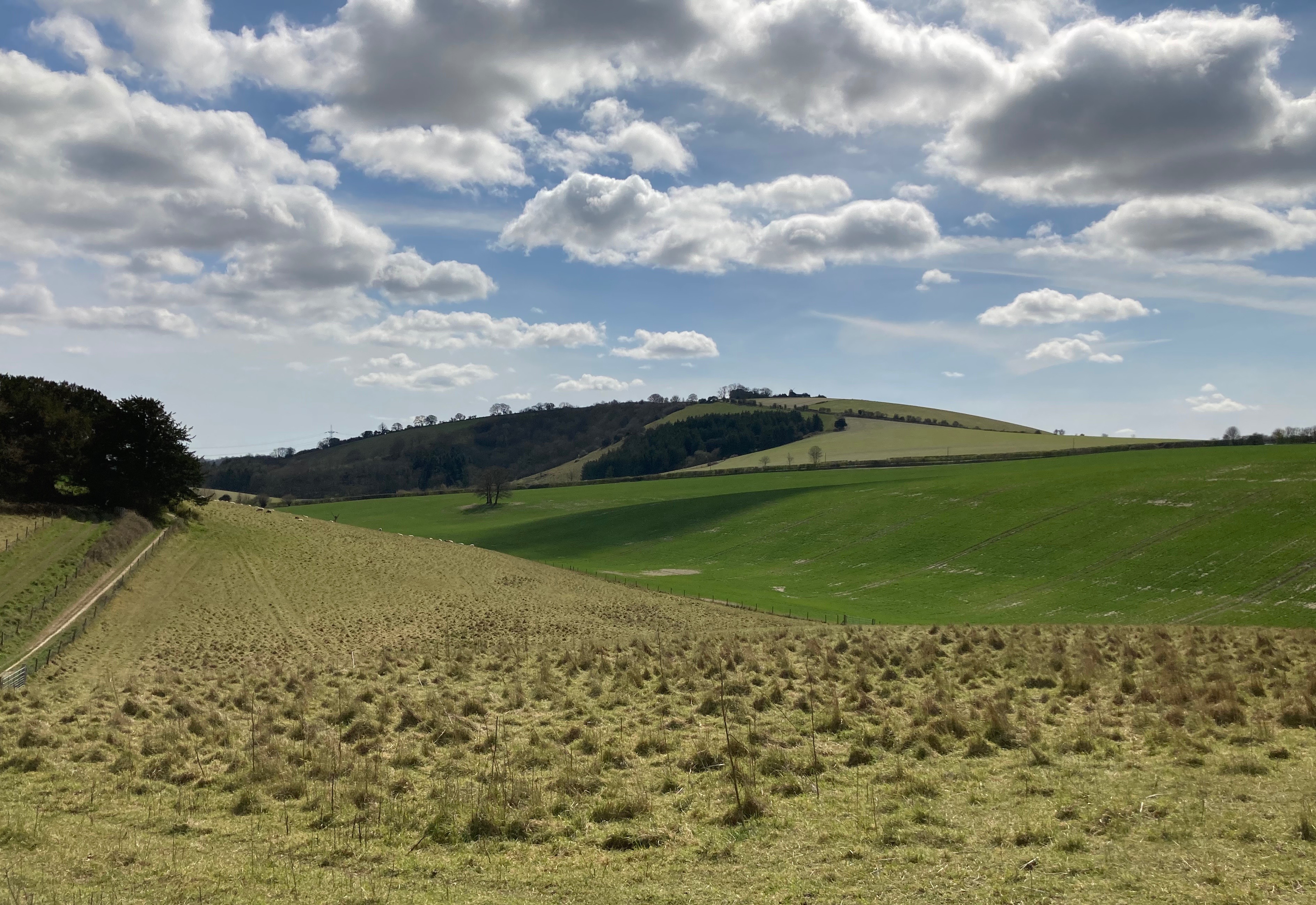
There is a windmill on the hill, but very tiny in this photo!
Albert’s letters this week are a little short on substance, yet they contain some amusing and puzzling details. I was amused by the egg and puzzled by Portsmouth’s contribution. I shall say no more about either, Dear Reader, and let you discover for yourself.
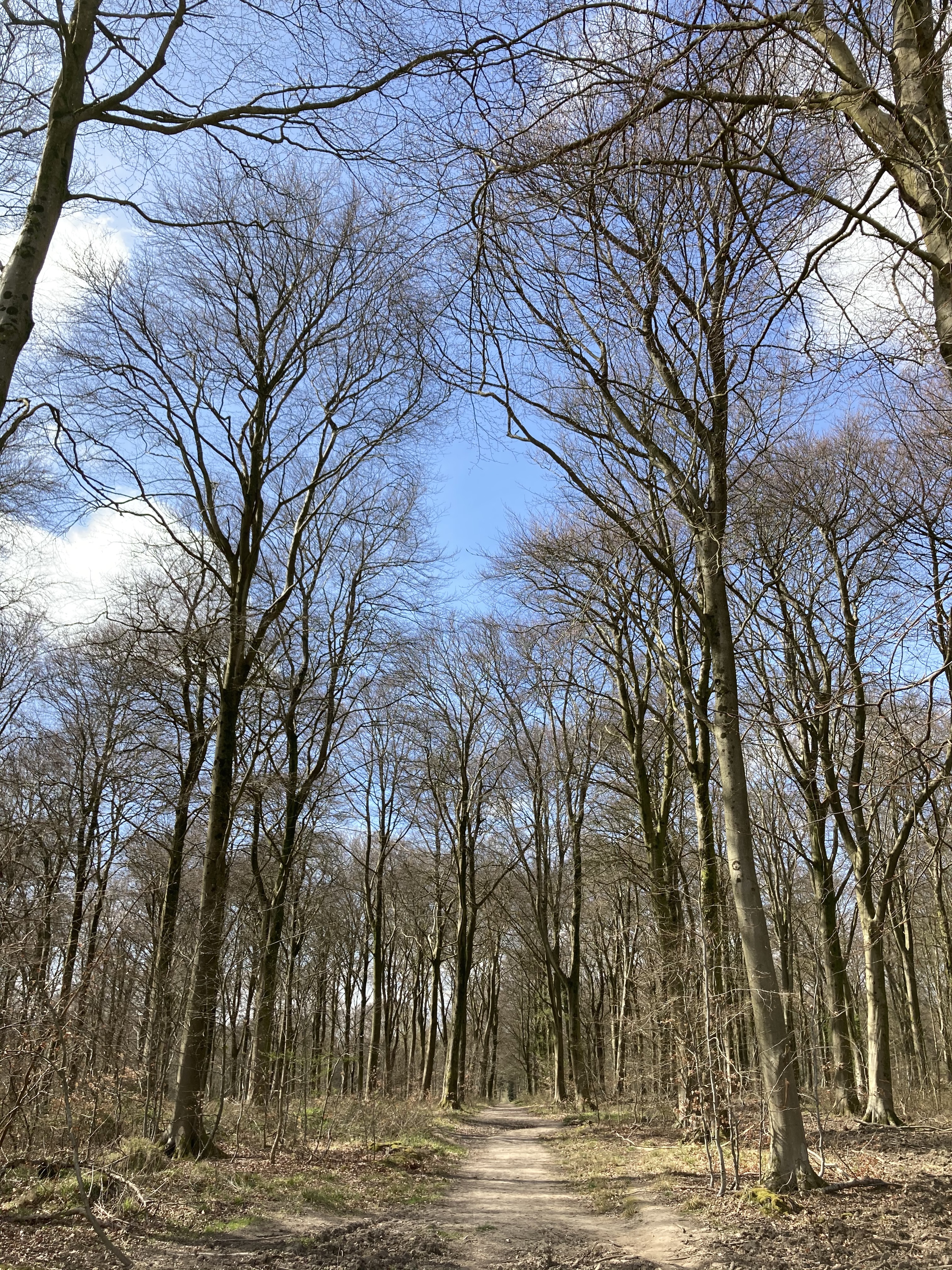
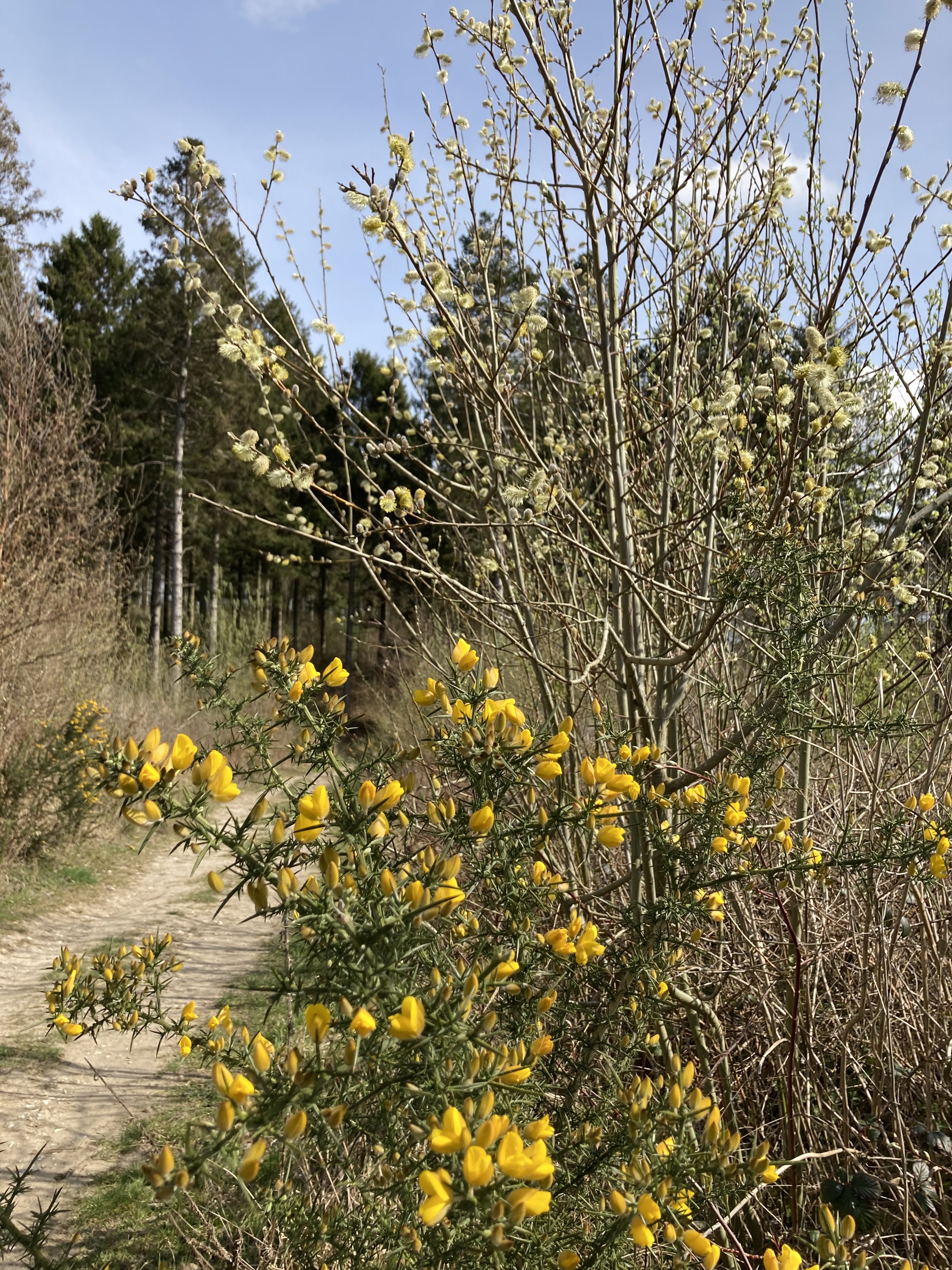
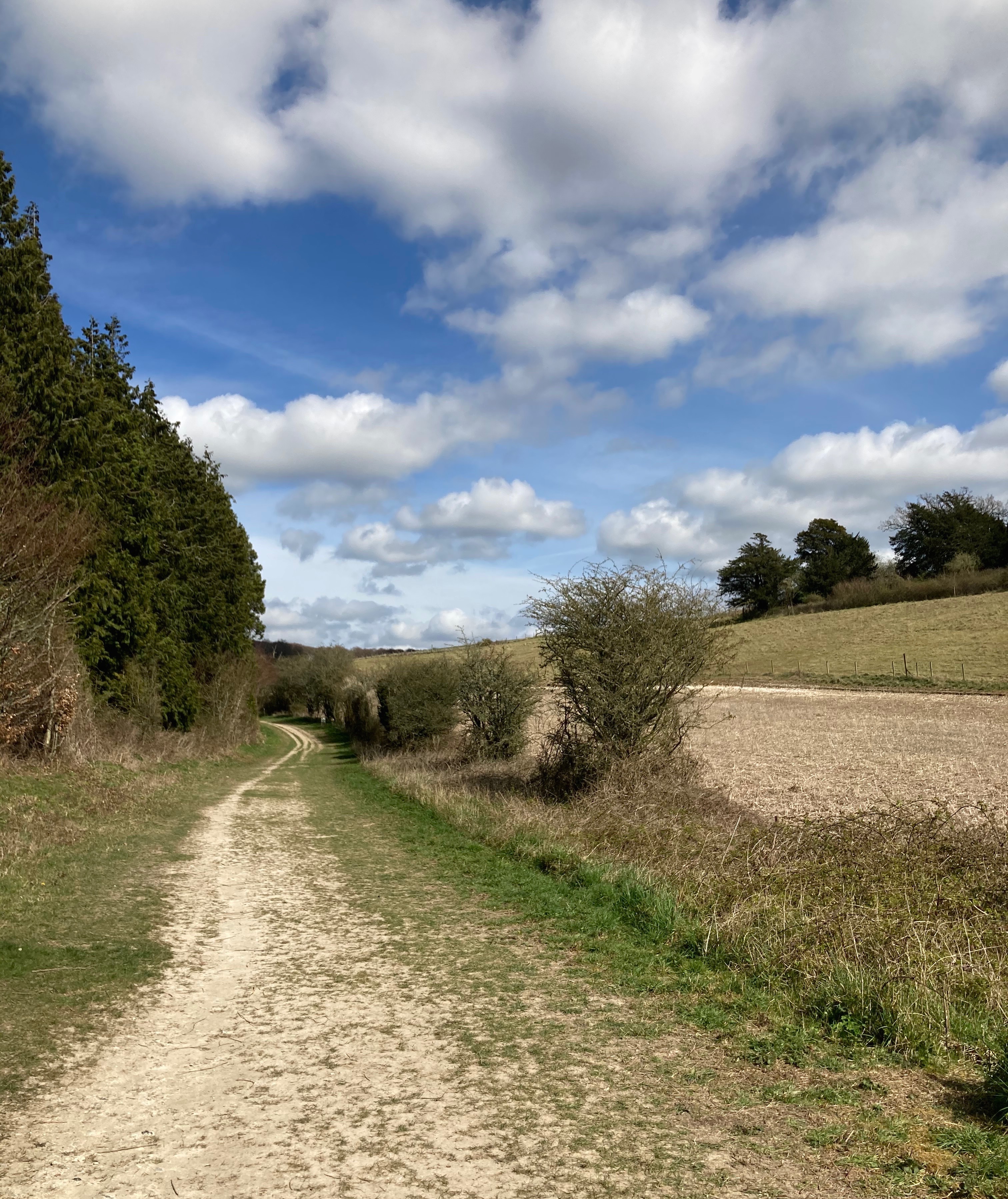
My photographs to accompany this post are from the very welcome trip I took to see my dear friend Clare, and her little girl. It was the first time I had been out of the city this year. Clare said to me, ‘let’s go and see Albert’s windmill‘ and so we met and climbed Butser Hill but the windmill couldn’t be seen from that vantage point. We clambered to the top of the hill and the three of us had a picnic under a bare-branched tree, looking out across the water of the Solent to The Island. We made a game with sticks and chalk stones and talked about our plans for when the world opens up again.
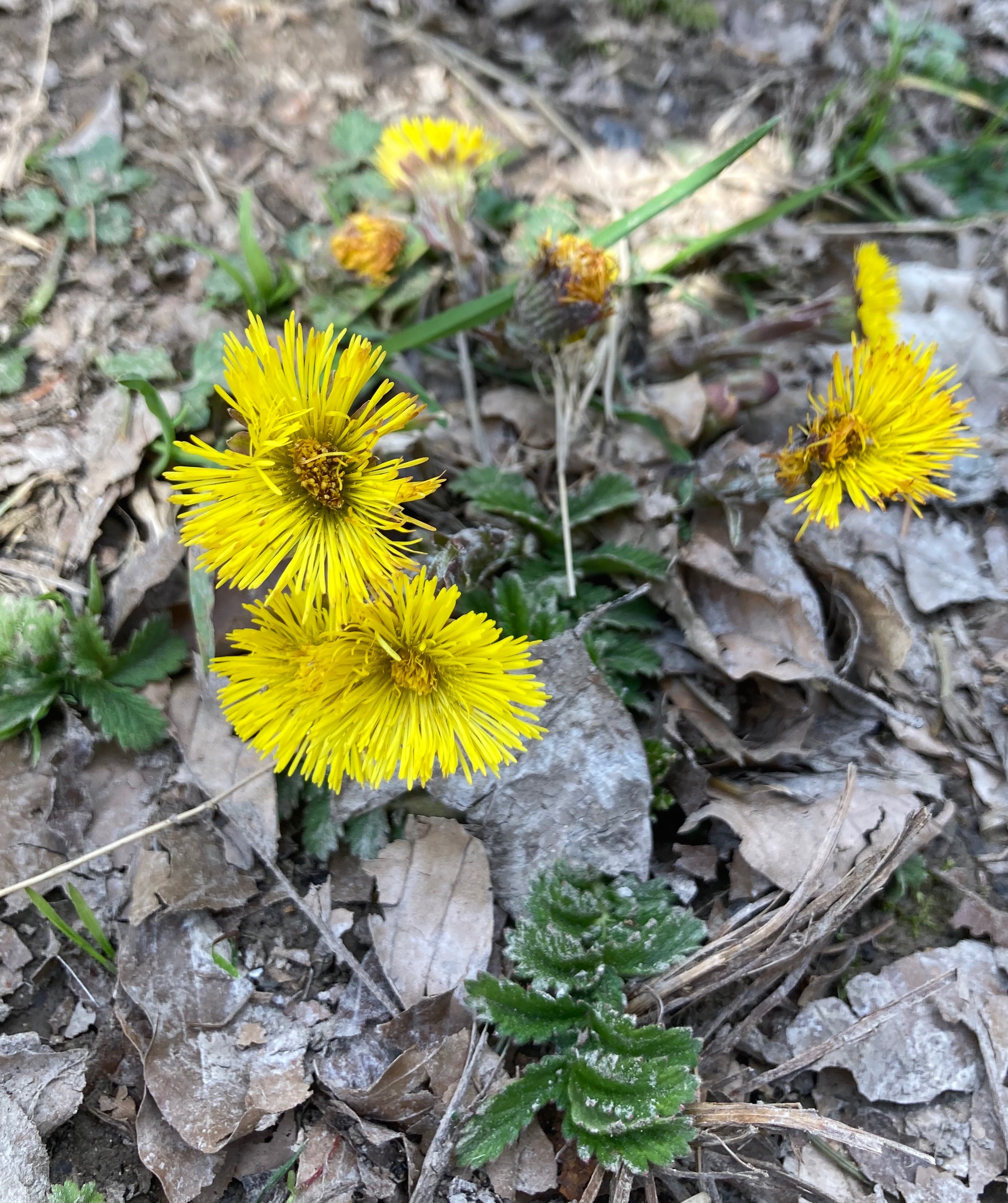
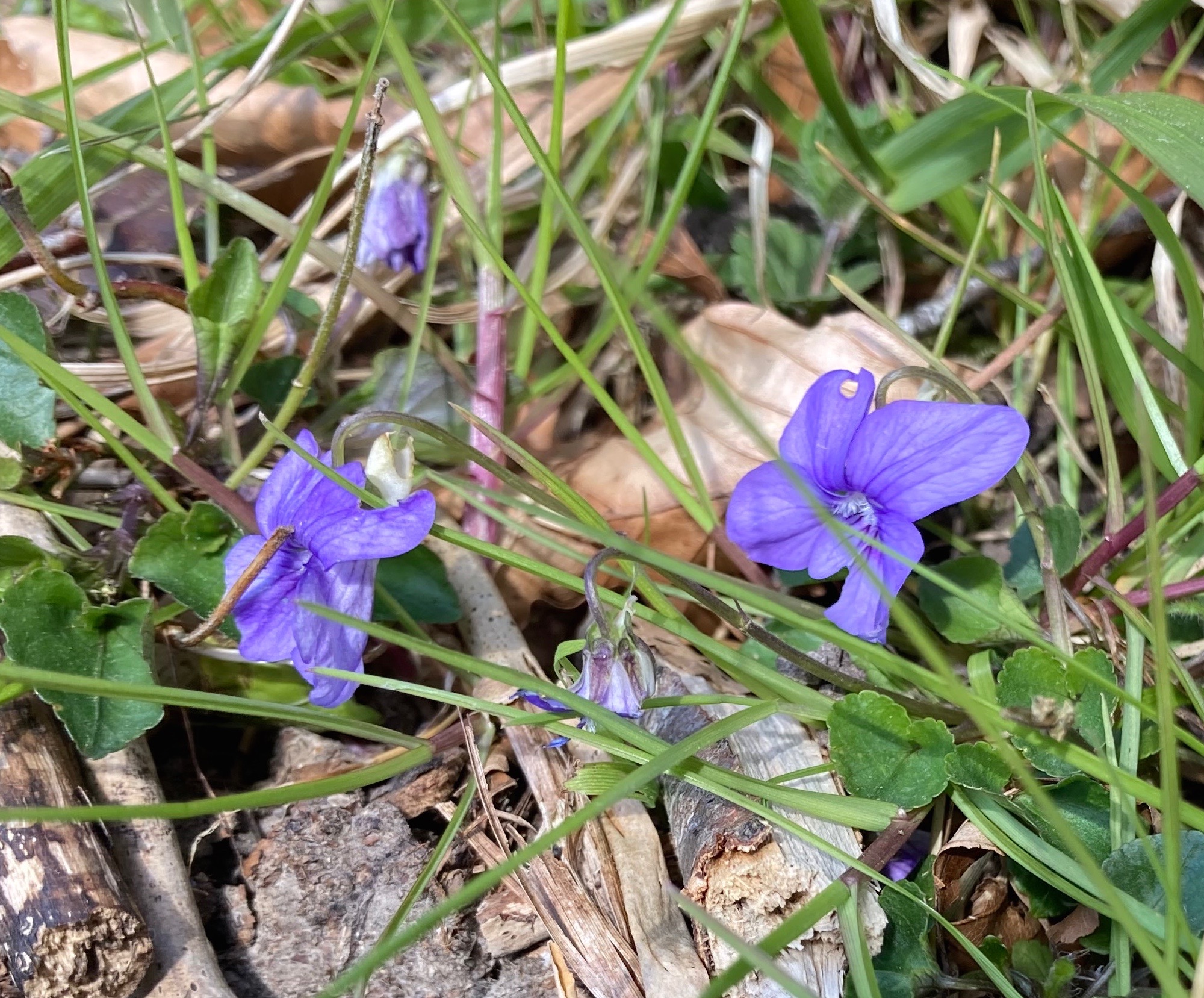
I left them later to walk on my own through the beech woods, seeking a view of the windmill. And as I walked deeper into the wood and the roar of traffic from the A3 subsided, I sighed and settled into a slower pace. Soft earth underfoot, not hard tarmac. Sounds only of birdsong and the gentle breezes of fresh air. I saw wild violets. I saw yellow gorse and yellow flowers I do not know the name of, perhaps coltsfoot that Albert also saw.
Then, as I came to the chalk path of the South Downs Way, I saw his windmill on the brow of a far off hill. With the beech trees and the violets behind and no planes in the sky, I felt I was experiencing life in that moment just as Albert would have. I sensed his presence, pointing a way. A way that sits outside of time, intangible but close at hand.
March 22 1942
Dear All,
This will be another short letter I am afraid, as the weather today is really too cold and miserable for me to venture out. There is quite a strong and unpleasantly cold east wind, and the top of the hills are over-hung with cold mist, and even in the hut there is a definite wind blowing across the back of my neck. So I am stopping in the camp for the whole of today, writing and reading and generally messing about.
Yesterday was very nice until the evening, when it became cloudy. I cycled to Calne early in the evening and did a little shopping. Then I took a look around the town which I had not previously seen in daylight. It is about the size of Botley but rather better, and with some good old stone houses. I took a little road which led me westwards out of the town, and soon became a footpath, which led to an old mill. From there I turned back along the riverside to Calne again. The walk was no distance but the birds were singing rather nicely & it was very quiet and peaceful looking across the river meadows in the twilight. Coming back in the dark I noticed that there was a new moon, which should be quite bright by next week, if I have to travel in the dark.
I had some supper last night in a W.V.S. canteen in Calne, as a very clean place. For sweet that had some sort of pudding with homemade plum jam on top, it was really lovely. I have put the bicycle in between the huts, and this afternoon I shall try to find some old sacks or blankets which would keep off some rain (which we shall get before long no doubt).
I have also bought some Vaseline which I can smear over the handlebars and 3 speed wire. I had better move the machine round to the east wall whilst the wind remains in this quarter, though I suppose this wind will not bring so much rain as the south.
I shall probably eat the egg today, for supper probably, not for a meal somewhere away towards Aldbourne as I had hoped. It seems almost a waste to eat it in camp, but will be doubtless very nice. The eggshell got rather cracked, but I think that was due to the spanner and things, which also broke up some of the biscuits. The chocolate biscuits were very nice, so is the cake which I have not yet finished. I really cannot think of anything further to say, so goodbye & love from Albert.
P.S. I have put on my pullover, after leaving it off for over a week.
Is this perhaps the same flower that Albert mentions in his travels?
Tuesday March 24
Dear All, I have just sent off a parcel, containing a jam jar, a pullover and some handkerchiefs. As parcels posted on Thursday do not seem to arrive until Monday, I must take to posting them off on Tuesdays.
Today has been really lovely, just the sort of day I would like for a Sunday. Had it not been the Music Circle today, I should have gone for a ride in the twilight. Tomorrow we are working all day as the sports afternoon is (as once a month) on Saturday, which will be very annoying in view of last week’s unkind weather. Another source of annoyance is that for this week we are having our tea later at 6 to 6.30 instead of 5.30 to 6. However, unless the weather is bad I shall go to Marlborough to find out where I can park my bicycle over the weekends, and also how long it takes me to get there.
I have got your letter written Sunday night, and am glad to see that we reached our War Weapons total; it really is a lot of money, I think that Portsmouth’s objective is only £2,250,000. I’m glad that the school did so well. [I transcribed the amount just as Albert wrote it. However that seems an extraordinary amount; was it perhaps £22,500?].
I suppose that Peter will be home when I go to the Island this weekend. I hope though that he will be alright when I see him on Saturday. I don’t know when I shall be home, by 9pm I trust. I don’t think there is time (it is 10.30pm) or necessity to say anymore except goodnight for a very little while from Albert.
Albert tells us that he is settling in to life on the RAF camp, happy to meet up with some familiar faces from Blackpool, and his former work colleague from Hamble (it’s a shame we do not get to know his name).
His training in Morse continues, along with learning about radio operations, which he finds quite easy. RAF Yatesbury apparently had a secret radar training section from 1942 onwards; of course Albert would not have been able to disclose any information, were he involved in this. What Albert does divulge about camp life is, in some respects, rather too much information in my opinion. I don’t mind reading about the cinema and his Saturday dinner out, but I did not enjoy reading about his ‘interesting’ trip to the dentist and his soap-saving endeavours!
Wednesday February 25
Dear All, many thanks for your letter which I think I received yesterday, but there is little to mark the passage of days here, so I am never sure which day is which. I am glad that you went to the pictures with Jean and enjoyed yourselves there, I expect Jean will manage to pay for her ticket out of her pocket money. The letter which came from Dickson Road was one which I had received long ago, but they found it behind the dressing table and sent it on in case it was one which I wished to keep. I must thank them for sending it on.
I have been getting on fairly well, & settling down in this past week. The work is almost entirely in classrooms with only a very little P.T. We mostly learn Morse and the way messages are sent out, and wireless, which at the moment is elementary magnetism and electricity and accumulators. I have thus done much of it before, much more thoroughly than they do it here, so that part of it comes very easily to me. The other is not very hard but the course is much more interesting than the plain Morse and drill which we did at Blackpool. We do not do any flying here.
One of the first things I did here was to break the little comb you gave me. It could not have been very strong as I just brushed my hair when it was wet, & the comb broke in two! I still have the mirror which is most necessary, as there is none in the hut or workhouse. I have the other (green) comb of course.
On last Friday I went to the cinema, & saw some old films, including a Mickey Mouse, and a “March of Time” issued whilst America was still out of the war. It was only 6d & quite good considering, though like everything else here, the cinema is inadequately heated & too adequately ventilated! Tomorrow I may go again to see a Deanna Durbin film – “Spring Parade”.
On Saturday evening I went with my Hamble friend and two other fellows to Calne, where we had dinner in the hotel there. A very good dinner too, of soup, chicken, potatoes and sprouts, chocolate pudding and coffee. It was a very pleasant evening, and a good change from camp life, in which meals are much more roughly served than in an hotel! I must go there again one Saturday.
I have also met two of the fellows who were billeted with me at Dickson Road, and they say that they have seen three of the others up here. I have seen several people whom I met at various times at Blackpool, so this is by no means a strange place to me. Strangest of all, I met last night a chap who for two years was in the same form as me at Taunton’s [Richard Taunton Grammar School]; a very pleasant coincidence. He too is on an Observer’s course, though about a month ahead of me, so we stand a chance of going to the same place together after this.
Monday and Tuesday evenings I spent writing letters and reading books. I have already got some way with my W.H. Hudson book. As the hut is so draughty & the NAAFI reading room shuts at 9.30, I usually go to bed at about 10.00 and until lights out (10.45) read in bed. Tonight I am up later writing this letter. Tuesday I sent a towel, shirt and collar to the laundry. I don’t know what the result will be but I have taken the risk until I have a definite reason for not doing so. Whilst on the sunject of clothing, perhaps you could send up my pullover next week. I do not remember if there is a sleeveless one still about, but if there is, perhaps you could send that one. If not the other will do.
Later in the day I had my teeth scraped, or sealed, as the dental term is. It consists of removing the tartar, or lime or whatever collects of them with a miniature scapel: quite an interesting process, and my teeth feel much cleaner as a result of it. In the evening I had a bath – a good hot one too, and that reminds me that I could not find my flannel. If it is at home perhaps you would send it up with the pullover. By collecting bits which other people have left, I have not used my soap yet. The water is extremely hard here and soap doesn’t lather at all easily. As that completes the page, & I have little else to relate, I will close now with love from Albert.
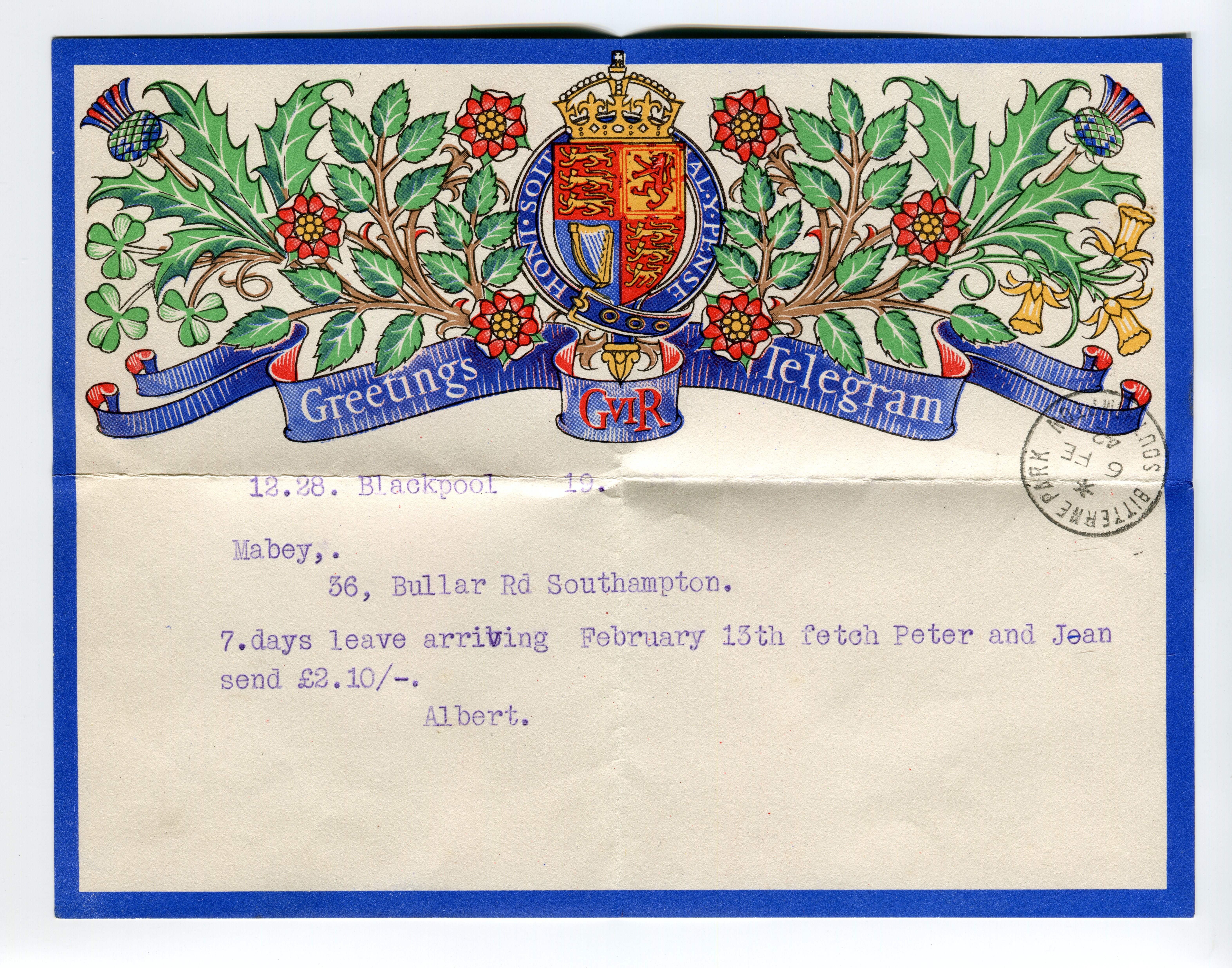
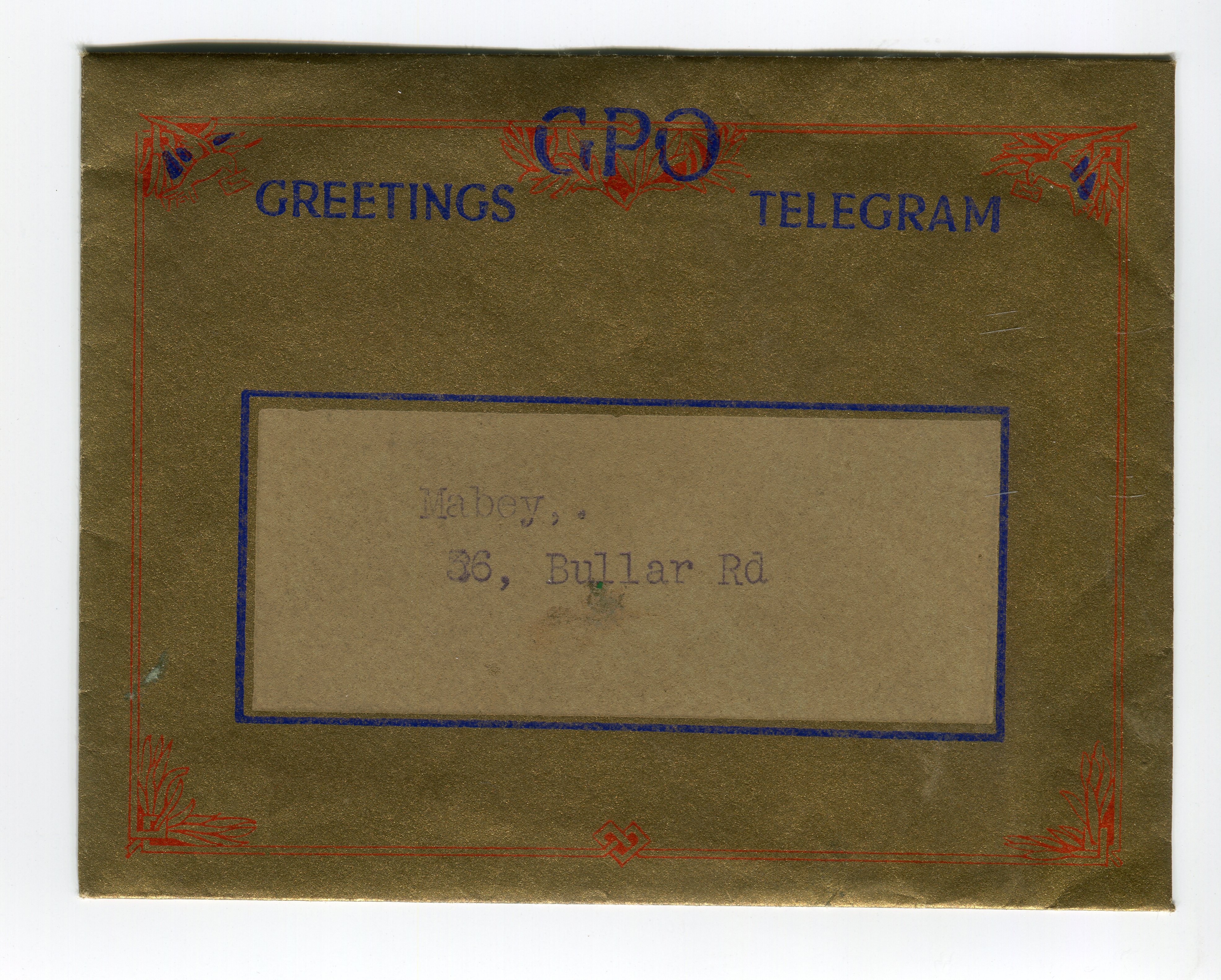
My Grandmother would have received this telegram at lunchtime on 6th February 1942. Imagine her delight at opening the golden envelope. Her son is coming home on leave.
Albert wrote a letter immediately after he despatched this glad news and I’ll share it soon. But this evening I wanted to mark this happy anniversary with you. Albert’s going to be opening the ‘warning gate’ soon, to walk through his own front door and into the arms of his Mum.