Last year my Uncle, Peter Mabey, died. In truth, he was the last of the Mabeys; that family heralding from the Isle of Wight that I have made the subject of these posts.
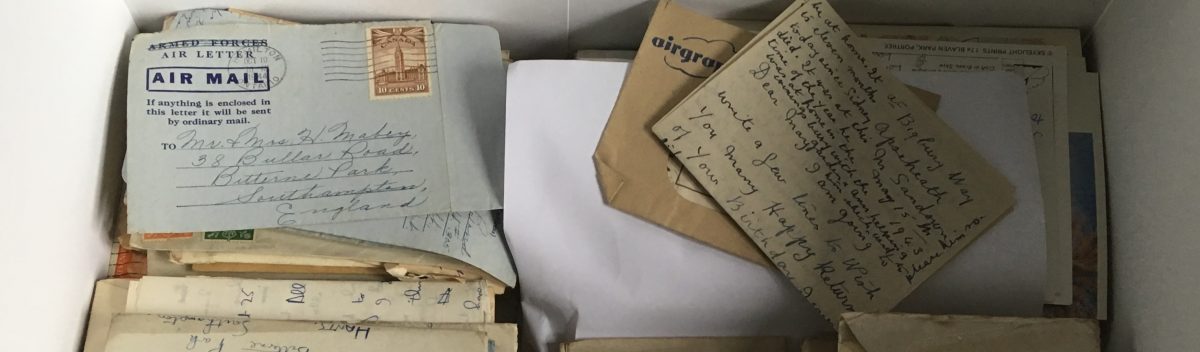
Peter was the last person living who knew the letter writers; his grandparents John and Jane, his aunties and of course his brother Albert. Yet in that big box of letters that I inherited, there were none from Peter, save a few childhood notes to his sister when they were separated through wartime.
Uncle Peter was not an enthusiastic or reliable communicator; he seldom replied to my Mother’s letters and did not like to speak on the phone. But he did engage with these posts, which I knew because he would post a comment, or add a like.
So, I have thought to add something about my Uncle here, important as he was to those who wrote and those who read. The following is a an edited version of the eulogy I wrote for his funeral.
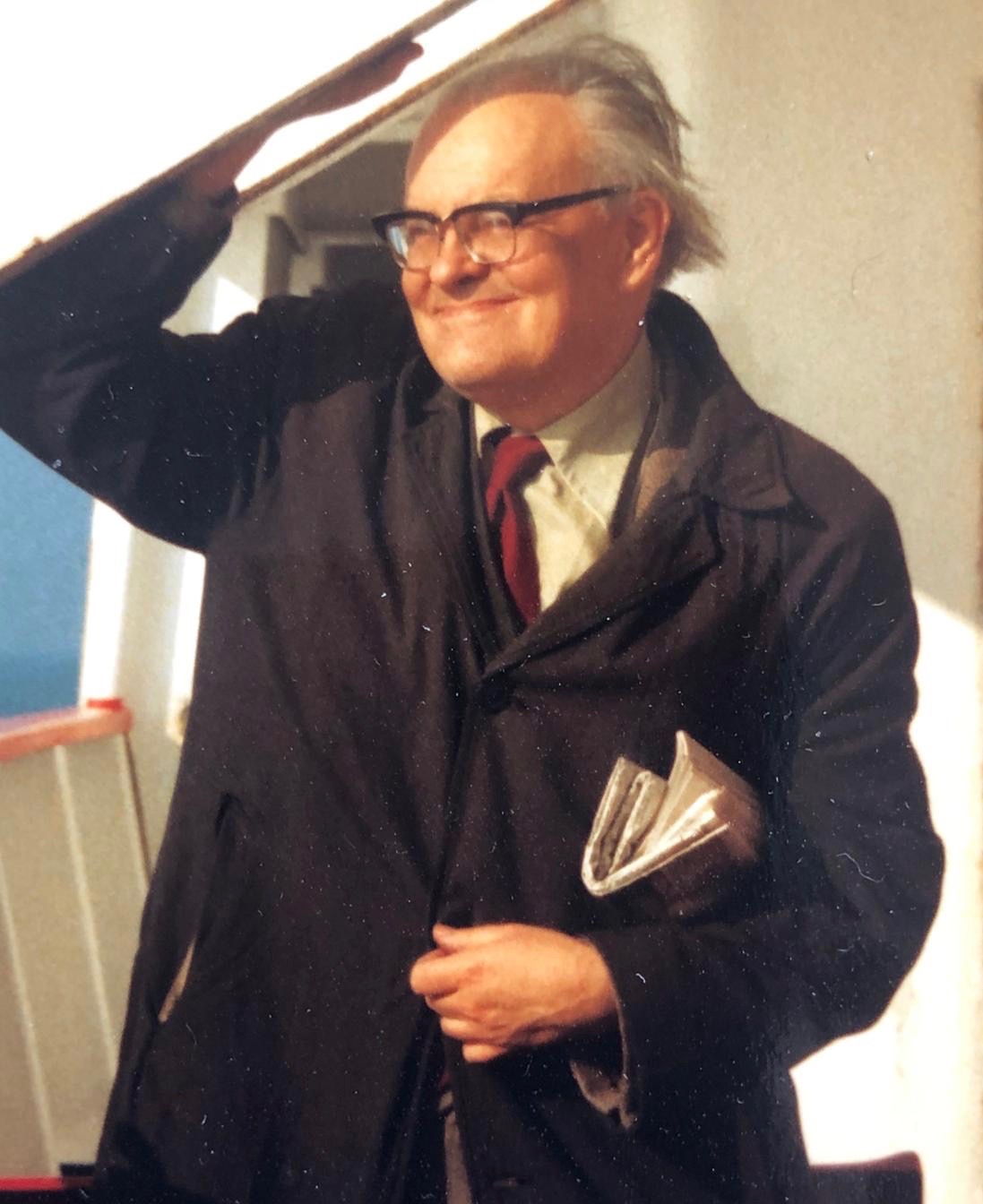
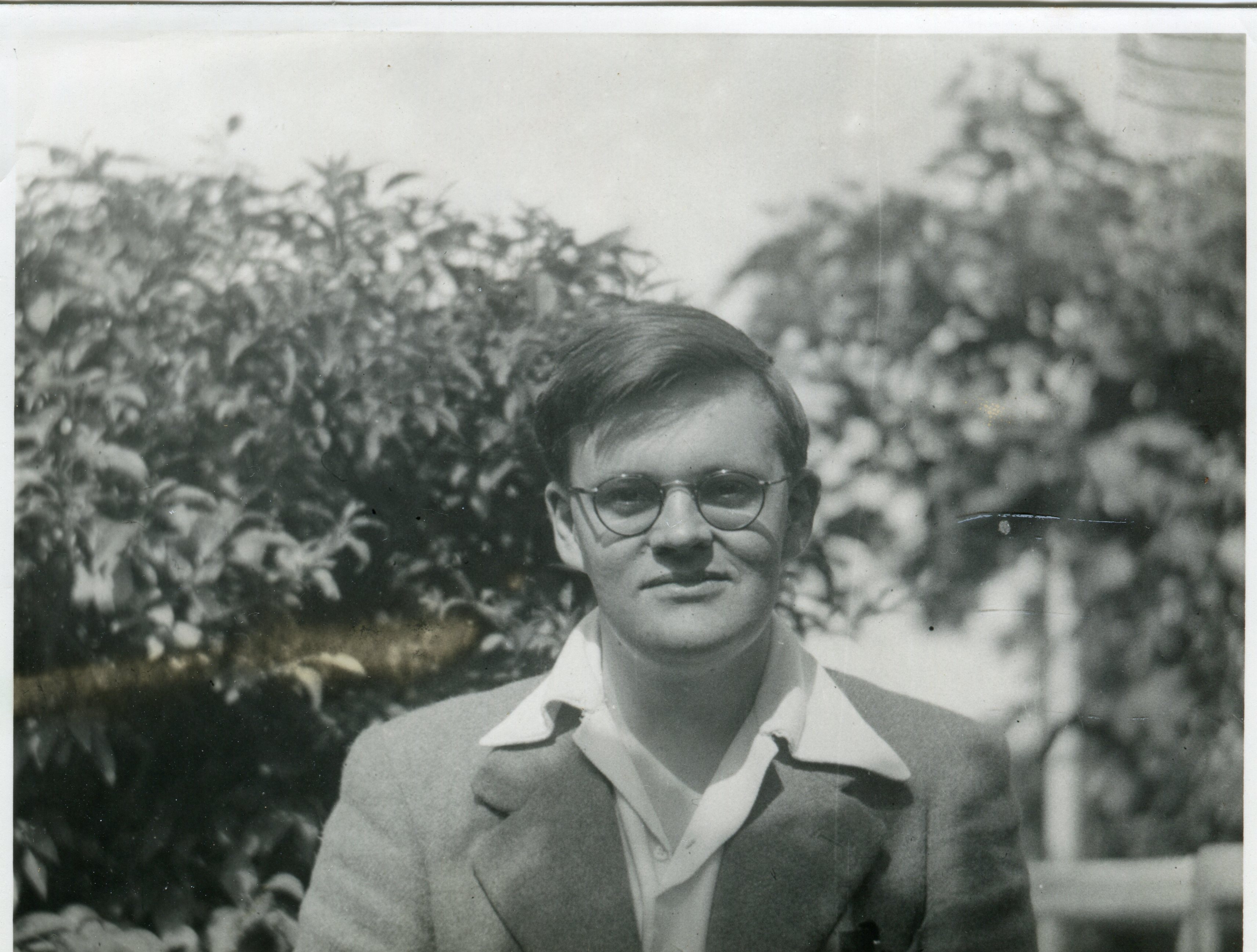
Peter Hedley Mabey was born on 21st March 1926, in Southampton. He was the second child of John and May Mabey. Peter was a clever but shy boy, who looked up to his older brother and shared many hobbies and interests with him.
When living in Southampton Peter, like his brother, had won a scholarship to attend Taunton’s Grammar School. When war began, he transferred to Sandown County School, on the Isle of Wight, where he excelled academically. He took his Matriculation early at 15, and his examination results were of such a high standard that he was awarded an Open Exhibition to Cambridge, which meant that his fees were paid for, so this award was life-changing for Peter. His achievement was such that it was reported in several local papers.
So, aged only 16, Peter went to Cambridge University to study Mathematics at Selwyn College. In 1944, whilst Peter was still studying in Cambridge, his brother Albert, who was by that time a Flying Officer in the RAF, was killed in a plane crash. Peter felt Albert’s death keenly. I recall speaking to him, around the time of the 80th anniversary of VE day, when Peter told me that he could not attend the college’s victory celebrations, because for him, the peace felt hollow without his brother. It was clear to me, hearing the emotion in his voice, that Albert’s death saddened him still.
After graduating, between 1944 and 1945, Peter was employed by the Royal Aircraft Establishment and trained in structural engineering. Peter then moved to Cheltenham and worked for Gloster Aircraft, developing the Meteor, the first British jet-fighter. By 1962 he was their Chief Structural Engineer. Peter then moved to Hawker Siddley Aviation, working in the ‘Advanced Projects Group’. He spent time working on designs for a Mach-5 Hypersonic Ramjet – a type of ultra high-speed aircraft that is still, decades later, on the drawing board.
Peter tried for a job at CERN, working with the large Hadron Collider, and was invited to Geneva for an interview, but they were “looking for a better mathematician than me”. In 1966 he finally got into computing full-time and joined STC Research Laboratories in Harlow, as a Software Engineer, his skill being, “an ability to pick up a language sufficiently quickly to be pretty good at debugging”. Peter remained at STC until his retirement.
Peter was, and remains, the cleverest person I have ever met. He was fortunate enough to be a young man during an age of great technological achievements, when people with mathematical and logic skills such as his were making many innovations in the realms of computing and telecommunications. He worked in computing, designing and writing software at a time when most people regarded computers as the stuff of science fiction. Which leads me to talk about his great love of Science Fiction and the societies and conventions that celebrated this.
Although Peter was actively involved in what’s known as ‘Fandom’ for 60 years or more, we as a family knew almost nothing about this aspect of his life. But, if you type Peter’s name into Google, you will find plenty of information on the conventions and societies he was part of. One post regarding Peter describes him as, ‘One of the Backroom Boys’: “Britain has produced those patient, inspired characters who’ve come up with some of our greatest scientific and technical ideas. And without knowing a great deal about Peter Mabey’s real-world life I get the feeling that he’s been one of those boffins, working away in backrooms on truly ground-breaking stuff. Peter has been around for a long time but because he’s a steady, conscientious, reliable sort of chap he’s not the sort that usually attracts attention.”
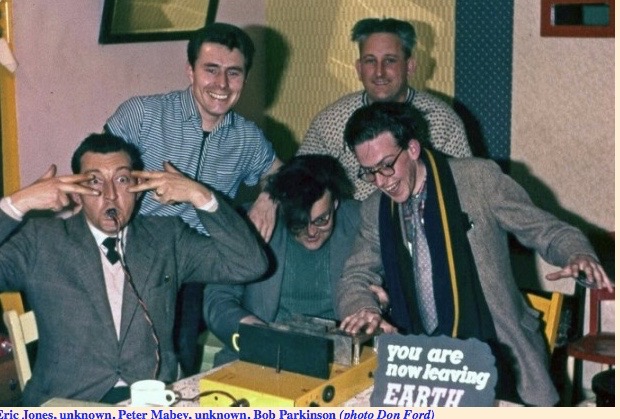
Although people at these clubs and conventions indulged in the fantasy element of science fiction, just like Comic-Cons today, Peter’s interests were more in the realm of the possibility of life on other planets and theories of space travel – much in line with astronomers and engineers of the time. That said, he enjoyed the conviviality of these gatherings with like-minded people, and he maintained his links with fellow fans over decades, both in person and online.
When we were children, Peter stayed with us three times a year, Easter, Whitsun and Christmas. He always brought some wine, from his latest wine club holiday, to France or Germany or Spain. Peter travelled abroad regularly at a time when most people went on holiday to Devon, or in our cases ‘Wet Wales’. He always took photographs of these trips, which he made in to slides for his post-holiday meetings, but sadly we never saw them.
Peter was a kind man. He always remembered our birthdays, generously sending us cheques even when we were well into our twenties. He could be relied on for a WH Smiths token, a Parker Pen or the latest ‘Guinness Book of Records’ for Christmas. When he came to stay with us, he always brought a holdall full of old copies of ‘Private Eye’, ‘Which Magazine’ and The Sunday Times Magazines. And he brought us huge piles of computer print-out paper for us to draw on, a product of those room-sized computers he worked with. How welcome all that free paper was in our artistic household!
Whilst my sisters and I may have differing recollections of Peter’s visits, we all remember what it was like to play board games with him. I marvel now that he was willing to play Monopoly, Cluedo and other games with four, fidgety young girls, but he made no concessions for our ages. You had to follow the rules to the letter and you were told off sharply if you did not. Usually, Peter won those games; I guess it taught us resilience.
If Peter was not enrolled in to playing a game with us to while away the long afternoons, then he would escape to the front room. Sitting in an armchair, he would take a pen from the top pocket of his jacket and write indecipherable formulae onto a used computer programme card, several of which he kept in his inside pocket. He would do that for hours, always accepting the offer of a cup of tea (with a biscuit of course).
Whilst Peter’s body grew frail, his mind remained as sharp as ever. He continued his interests with Maths and science; through subscriptions to numerous magazines and journals, – the New Scientist, the Mathematical Society journal and MENSA. Finally, the time came for Peter to leave H… and the high-rise flat he had lived in for 60 years. When he came to C… we were relieved to know that he was safe and cared for. Peter was happy in the care home. He could continue his routine of watching ‘Countdown’ and could listen to ‘Radio Three’ as he posted on Facebook. I think that attending Scrabble club became a highlight of his week, and of course his skills quickly became apparent to all.
Peter was a man of great intellect, with a wide range of interests. I truly do not think that Peter was ever bored, he always had something to do. It’s true that he did not share much of his life, or his achievements with us. Quite possibly because his spheres of interests were not ones we comprehended, but more than that, I think Peter was a humble man. Completing a task, solving a puzzle pleased him; to boast to others about it was not in his nature. He did no harm on this earth. He supported many, many charities – ‘Oxfam’, ‘Wateraid’, ‘The World Wildlife Fund’, ‘Save the Children’ to name but a few. Peter was a quiet humanitarian. He was our uncle, our great uncle, our great-great uncle. Our family. He mattered to us. And we loved him.
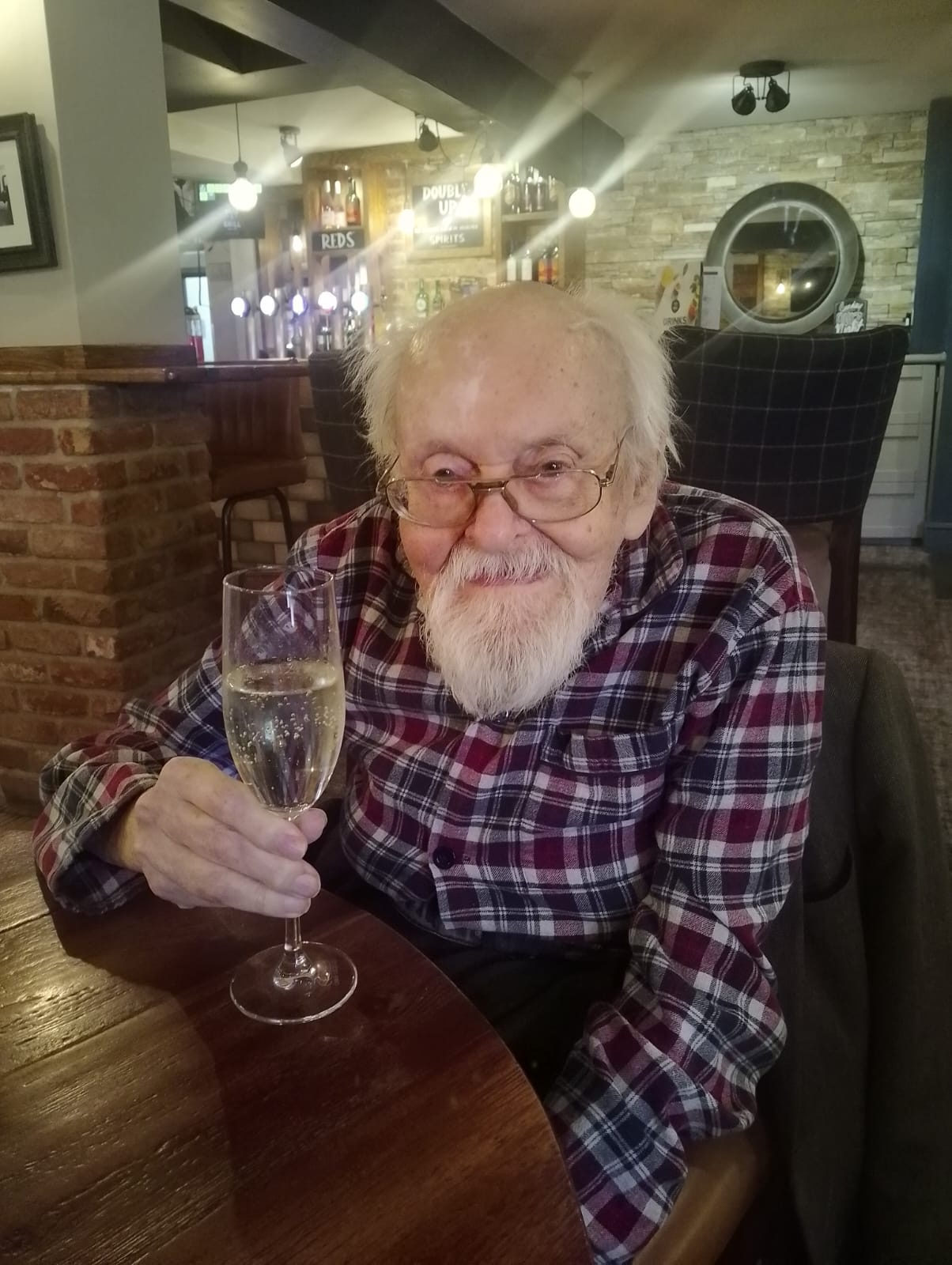
What Peter would think of me making him the subject of a post I do not know. But I am certain that he would encourage me to ‘keep going’ with these posts. On one of the last occasions that I saw him, he read some of Albert’s as yet unpublished letters, ones that he had asked me to bring. I could see it made him happy to read again those words from his long-lost brother.


So sorry for your loss, Louise. Peter sounds like a kind man who led a very interesting life. I enjoyed reading about him very much.
LikeLiked by 2 people
thank you Brad
LikeLiked by 1 person
Please accept my condolences on the loss of your Uncle Peter. You’ve written a beautiful tribute to him.
LikeLiked by 2 people
Thank you Liz
LikeLiked by 1 person
You’re welcome, Louise.
LikeLike
A great eulogy for a very interesting man!
LikeLiked by 1 person
Such a beautiful euology. Peter seems to have been a very interesting and multi-facetted man with many interests to keep him going. It seems he lived life to the fullest – very inspiring! I am sorry for your loss.
LikeLiked by 1 person
Thank you for your kind comment ☺️
LikeLiked by 1 person